

The company
GILLES TOOLING GmbH is one of the leading manufacturers of high-quality motorcycle accessories and has stood for innovation, precision, and the highest quality for over 20 years.
Based in Luxembourg, the company develops technically sophisticated components that impress motorcycle enthusiasts worldwide, from hobby riders to professionals alike.
The product range extends from footrest systems and handlebar stabilizers to crash pads and other performance components that noticeably optimize riding comfort, safety, and dynamics.
Thanks to innovative designs, sophisticated adjustment options, and excellent workmanship, GILLES TOOLING products meet the highest standards and offer motorcyclists a noticeable increase in control, performance, and customization.


Why it was time to introduce a new manufacturing process
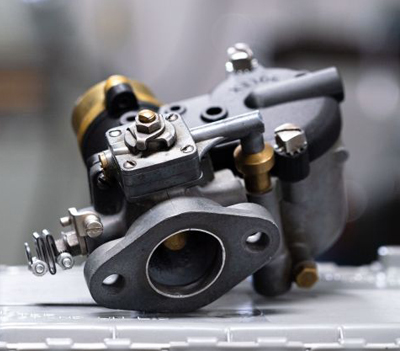
Vor der Einführung des industriellen 3D-Drucks setzte GILLES TOOLING Before the introduction of industrial 3D printing, GILLES TOOLING relied exclusively on traditional machining for the production of operating equipment, grippers, and fixtures. Components were programmed in CAM in a complex process, milled from aluminum, and then assembled. This process was not only time-consuming and resource-intensive, but also presented a number of challenges:


How industrial 3D printing perfectly complements and optimizes existing manufacturing processes
In order to meet increasing demands for efficiency and flexibility, GILLES TOOLING decided to integrate a : Markforged X7 3D printer into its production process. This technology was chosen because it offers a number of key advantages:
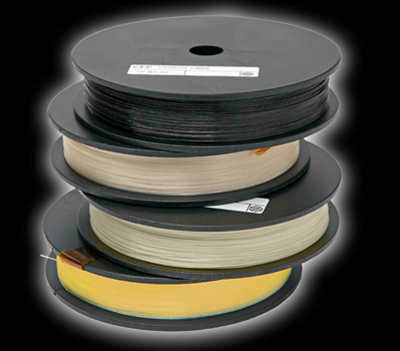
High stability: Thanks to continuous carbon fiber reinforcement, extremely resilient components with a long service life are produced.

Easy to use: The machine features a user-friendly interface and can be seamlessly integrated into existing production processes.
Another advantage is the flexibility of the software,which allows for precise adjustment of geometries. This enables the creation of even more functional equipment.
Another Markforged machine has since been purchased. Both machines are used in several departments at GILLES TOOLING:
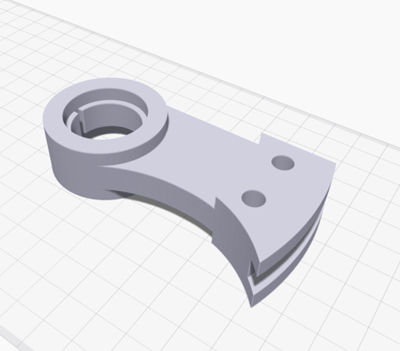
In machining, printed gripper fingers for robots and milling fixtures for post-processing are used. These components are immediately available and no longer need to be
milled from aluminum, which saves both time and money. Previously, even with prepared blanks, each pair of grippers required around 2–3 hours of programming and milling time. Today, this runs parallel to day-to-day business—the printer works while employees take on other tasks.
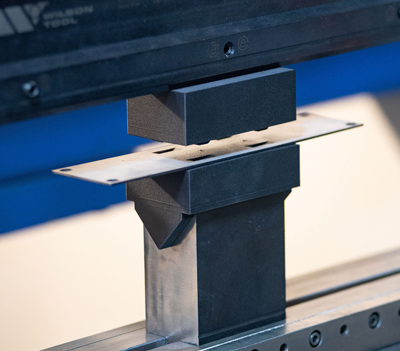
3D printing has also proven its worth in assembly: here, assembly and laser devices are manufactured that make the work of employees easier and make processes considerably more efficient.
In quality assurance, customized measuring devices and auxiliary tools are used to enable precise verification of component accuracy.
Even sales benefits from additive manufacturing: Presentation holders for trade fair stands are manufactured directly on site to optimally present products and maximize trade fair presence.

"We used to mill all the grippers for our robots. Greifer für unsere Roboter gefräst.
Today, we manufacture 90% of them with our 3D printers." mit unseren 3D-Druckern.“
– Niko Lempges, Production Manager
Optimized workflow thanks to digital ordering system
A key component for the smooth implementation of 3D printing is the newly introduced ordering system in Microsoft Teams.
Design engineers can upload their CAD models there and specify when and in what quality they need the component. The model is then configured in the Eiger software and placed directly in the print queue. Two responsible employees ensure that the printers are utilized 24/7 and that there are no downtimes. This optimized workflow ensures that the required components are available quickly and efficiently. The system is now so in demand that the internal lead time for 3D-printed parts is 16 days, and around 2,500 components are manufactured on the two Markforged machines each year.

The internal lead time for 3D components is now 16 days because the system is in such high demand.
Efficient manufacturing with Markforged 3D printing: The solution for GILLES Tooling
The conclusion after two years: The investment in Markforged machines has more than paid off!
Not only do the machines offer a more economical solution compared to traditional mechanical manufacturing and incur no follow-up costs.
The machines also operate around the clock, without any setup costs or additional operating personnel.
But that's not all!
These 5 added values stand out for GILLES TOOLING:


Summary and outlook
The advantages speak for themselves – which is why GILLES TOOLING will be focusing even more strongly on expanding additive manufacturing in the future. Ausbau der additiven Fertigung.
Additional printing devices for optical measuring systems are to be developed in order to further optimize quality assurance.
The range of applications in production will also be expanded – particularly in the area of assembly and production aids.
In addition, the possibility of introducing metal printing as a supplement to existing manufacturing is being examined in order to produce even more components in-house and further increase manufacturing capacity.
3D printing has proven to be a real efficiency driver at GILLES TOOLING: production times have been shortened, costs reduced, and operating resources manufactured much more efficiently.
The rapid availability of customized components has optimized processes and the company is now even better prepared for short-term changes and requirements.
Additive manufacturing has become an indispensable part of the company and will continue to be expanded in the future to tap into additional potential in production.

Img:
KTM x GILLES
Would you like a live demo, have questions or need a quote for a Markforged 3D printer?
Contact us now!
 Mark3D GmbH
Rodenbacher Straße 15
35708 Haiger
Phone: 07361 63396 00
E-mail: markforged@mark3d.de
Global market leaders rely on Markforged 3D printers