

The company
RI Research Instruments GmbH is a medium-sized technology company and plant manufacturer based in Bergisch Gladbach.
For more than 30 years, it has been developing and manufacturing complex small series and special components for research institutions such as CERN, the semiconductor industry, and medical technology.
With 420 employees, RI Research Instruments has already produced technical components such as particle accelerators and high-frequency resonators for more than 200 companies.


Why turning and milling operating resources was no longer sufficient
Until now, RI Research Instruments has milled and turned its prototypes, tools, and production equipment for mechanical manufacturing exclusively from aluminum..
However, as customer requirements increased, so did the complexity of the components required. Despite state-of-the-art manufacturing, the company quickly reached the limits of machining technology..


Industrial 3D printing as a solution
RI Research Instruments was looking for a suitable solution to make production faster, more flexible, and more cost-effective. zu gestalten.
About four months ago, the company became aware of Mark3D and additive manufacturing with Markforged machines via LinkedIn and proactively signed up for a free initial consultation. After a 30-minute initial consultation, an appointment was made on site in Bergisch Gladbach to analyze the production conditions and specific applications in detail.
During the appointment, it quickly became clear that Markforged 3D printers would be a useful addition to mechanical manufacturing. .
RI Research Instruments decided to purchase the machine for these three reasons: entschied sich RI Research Instruments dazu, die Maschine zu kaufen:
• The production of prototypes, tools, and equipment is automated.
• Production costs are significantly reduced.
• The machine offers greater flexibility in the production of complex components.
er Fertigung komplexer Bauteile.
Just eight days later, the industrial printer, complete with software and materials, was installed in the company's production facility and was immediately ready for use.

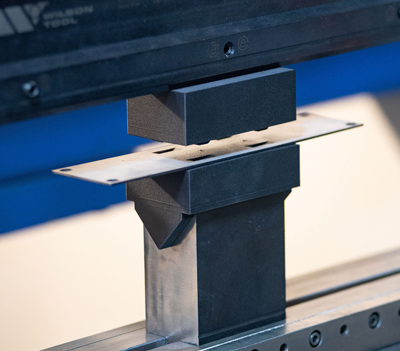
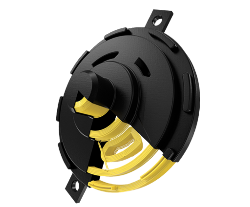
Ferdinand Bunte (left, Mark3D) discusses a stamping die (thermoforming tool) for the manufacture of high-frequency resonators with Peter vom Stein (center) and Joël Grüne (right) from Ri Research Instruments.

"In the past, the embossing stamp was laboriously milled, reworked, and polished. Now, the Markeforged machine does everything in a single step, automatically and without human intervention.
What impresses us most? The fact that the stamp can withstand up to 35 tons."
– Joël Grüne, Design Engineer, RI Research Instruments GmbH
Markforged is no ordinary industrial 3D printer
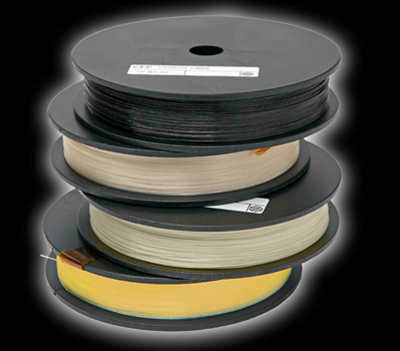
Conventional 3D printers use short fibers at most to manufacture components. But Markforged's 3D printers can do more:
With carbon continuous fiber technology, components can be printed that are stronger than aluminum. aufweisen.
How does RI Research Instruments benefit from this?
Read for yourself.


“The workflow from the model to the integrated software to the printed component runs smoothly and reliably.”
– Peter vom Stein, Senior Project Engineer, RI Research Instruments GmbH
More than 1,700 industrial companies trust Mark3D
On-time delivery
For us, good cooperation starts with shipping. We deliver your Markforged 3D industrial printer reliably within just 1–3 weeks.
Compatible complete solution
We want our customers to be able to start printing right away. That's why we provide you with a complete package of software, hardware, and materials. This saves you time and money on coordination and delivery.
Customer-oriented service
If you have any questions or suggestions, please feel free to contact us by phone or email.If you need replacement parts or have an urgent request, we will be happy to help you quickly.

Summary and outlook
Today, components printed with the Markforged machine are replacing numerous fixturesthat were previously milled from aluminum alloy. gedruckten Bauteile, zahlreiche Vorrichtungen, die zuvor aus einer Aluminiumlegierung gefräst wurden.
This has enabled RI Research Instruments to save significant production costs, which have been invested in the purchase of a larger Markforged 3D printer. But that's not all: in the future, the additive process is to be integrated even more closely into production.
Specifically, this means:
• Even more fixtures and tools are to be manufactured with the industrial 3D printer and used in production to supplement the mechanically manufactured components. in der
Fertigung eingesetzt werden.
• The proportion of operating resources printed with carbon continuous fiber technology is to be gradually increased. gedruckten Betriebsmittel soll schrittweise weiter erhöht werden.

1
Visiting Ri Research Instruments (from left): former Markforged CEO Shai Terem, Peter vom Stein from RI, Mark3D CEO Daniel Held, Markforged VP Sales EMEA Matteo Stagni, Joël Grüne from RI
Daniel Held, Markforged VP Sales EMEA Matteo Stagni, Joël Grüne von RI
Would you like a live demo, have questions or need a quote for a Markforged 3D printer?
Contact us now!
 Mark3D GmbH
Rodenbacher Straße 15
35708 Haiger
Phone: 07361 63396 00
E-mail: markforged@mark3d.de
Global market leaders rely on Markforged 3D printers