
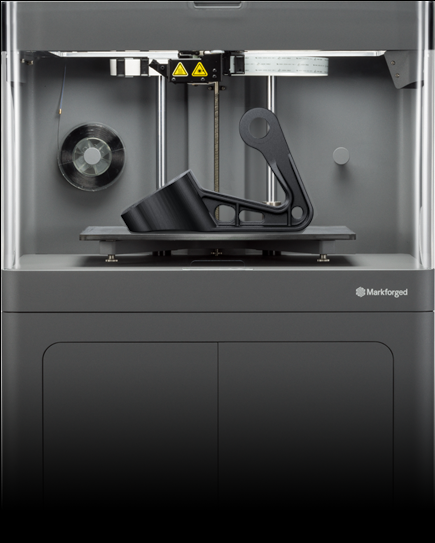
The Markforged X7 – The X-Series
Industrial 3D printers for real functional components.
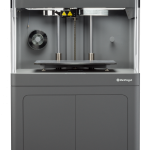
The Markforged X7
The Markforged X7 is an industrial composite 3D printer designed to produce strong, functional parts for manufacturing, tooling and engineering applications.
As part of the Markforged X-Series, the X7 combines Onyx base material with continuous fibre reinforcement, giving manufacturers a practical way to produce robust composite components in-house.
The Markforged X7 is commonly used for jigs, fixtures, grippers, tooling, functional prototypes and selected end-use parts, where strength, surface finish and repeatability are important.
Why choose the Markforged X7
The Markforged X7 is built for manufacturers who need stronger parts than standard plastic 3D printing can provide, without moving to metal or large-format systems.
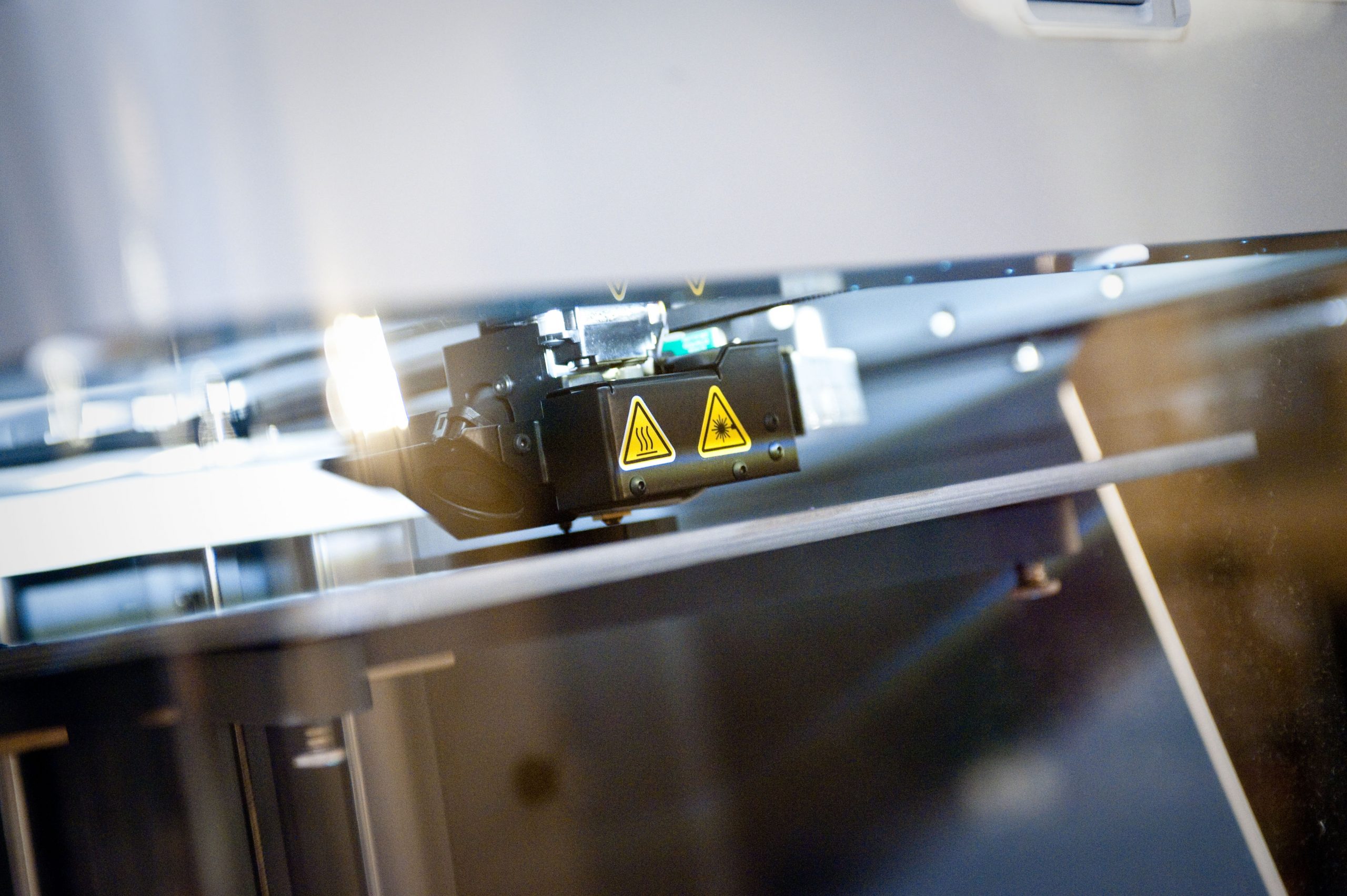
With continuous fibre reinforcement, in-process laser inspection and Eiger 3D printing software, the X7 helps engineering and production teams produce functional composite parts with confidence.
Together, these features make the X7 suitable for equipment manufacturing, robotics, automotive components, production aids and workshop tooling.
Print strong functional components
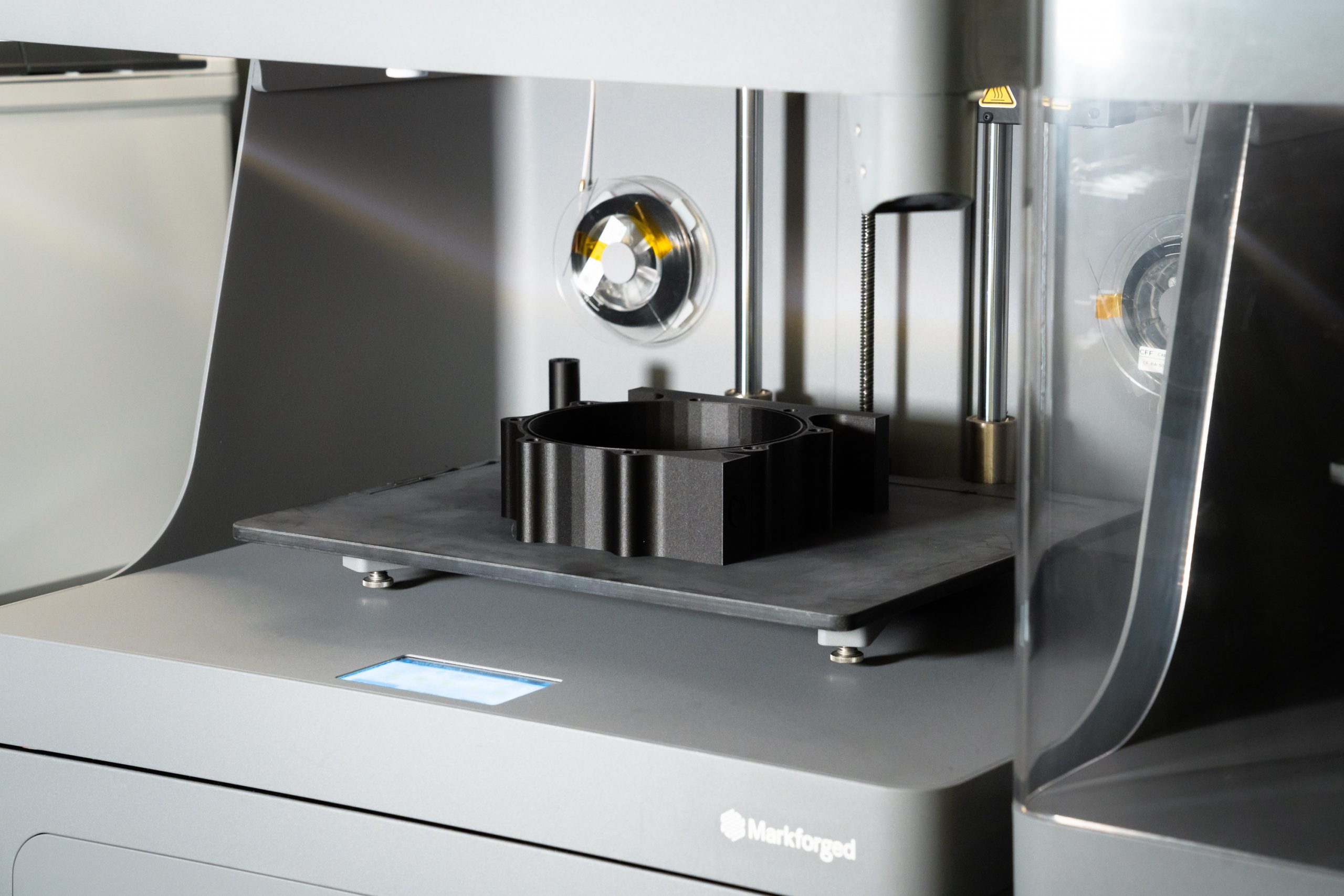
The Markforged X7 can reinforce parts with continuous carbon fibre, fibreglass, Kevlar® and HSHT fibreglass.
Continuous fibre reinforcement allows strength to be added where it is needed in the part. This helps engineers design components for tensile, compressive or bending loads, rather than relying on the base material alone.
For manufacturers, this creates a practical route to producing strong, lightweight parts in-house for applications that would otherwise need to be machined or outsourced.
Produce parts with a high-quality surface finish
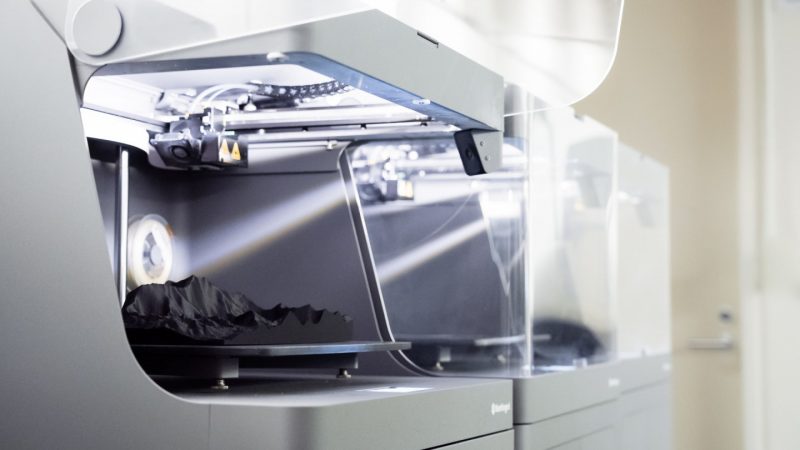
The Markforged X7 prints with a minimum layer height of 50 μm, allowing parts to achieve a fine surface finish for functional and customer-facing applications.
When printed in Onyx, components have a professional look and feel suitable for fixtures, housings, grippers, prototypes and production tools.
This makes the X7 useful where both performance and appearance matter.
Inspect parts during the print process
The Markforged X7 includes laser-assisted build process control for in-process inspection, active print calibration and bed levelling.
Using Eiger, teams can define tolerance requirements and inspect parts during the printing process. If an issue is detected, operators can be notified and have the option to stop the print remotely, helping to reduce wasted time and material.
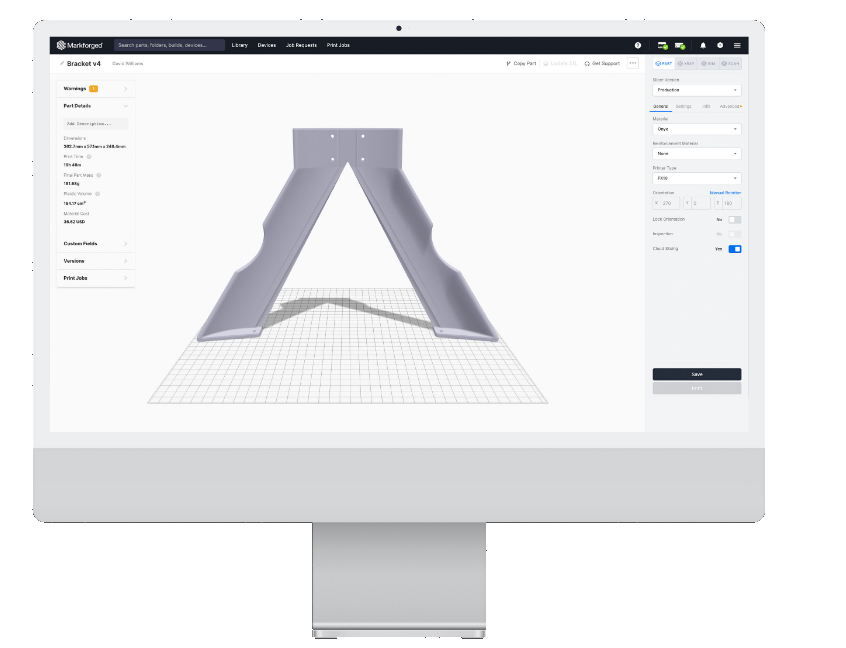
The Digital Forge:
Powered by Software
The Markforged X7 is powered by Eiger 3D printing software, a cloud-based platform designed for part preparation, fibre control, and print management.
Eiger forms part of the wider Digital Forge platform, supporting the workflow from CAD file to finished component. It enables:
- Centralised part storage and management
- Fibre preparation and slicing
- Inspection and tolerance workflows
- Remote print monitoring
- Fleet management across multiple
- Markforged printers
This makes the X7 suitable for single-machine use and also for manufacturers looking to manage multiple Markforged systems across teams or facilities.
Materials available
The Markforged X7 supports a broad range of base materials and continuous fibres, allowing manufacturers to select materials based on strength, stiffness, surface finish, flame resistance, ESD performance or impact resistance.
Base materials


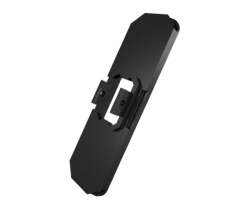


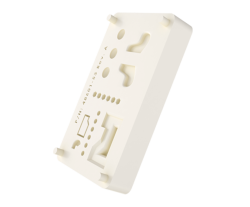


Continuous fibres

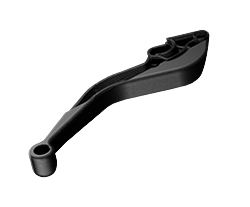


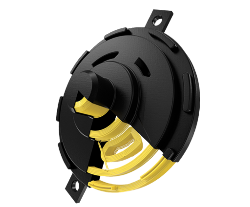

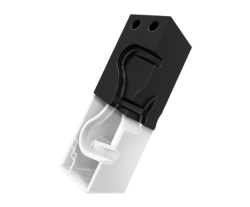

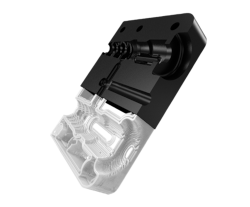
The combination of Onyx and continuous fibre reinforcement is central to the X7’s capability, giving engineering teams the ability to produce lightweight, strong and application-specific composite parts.
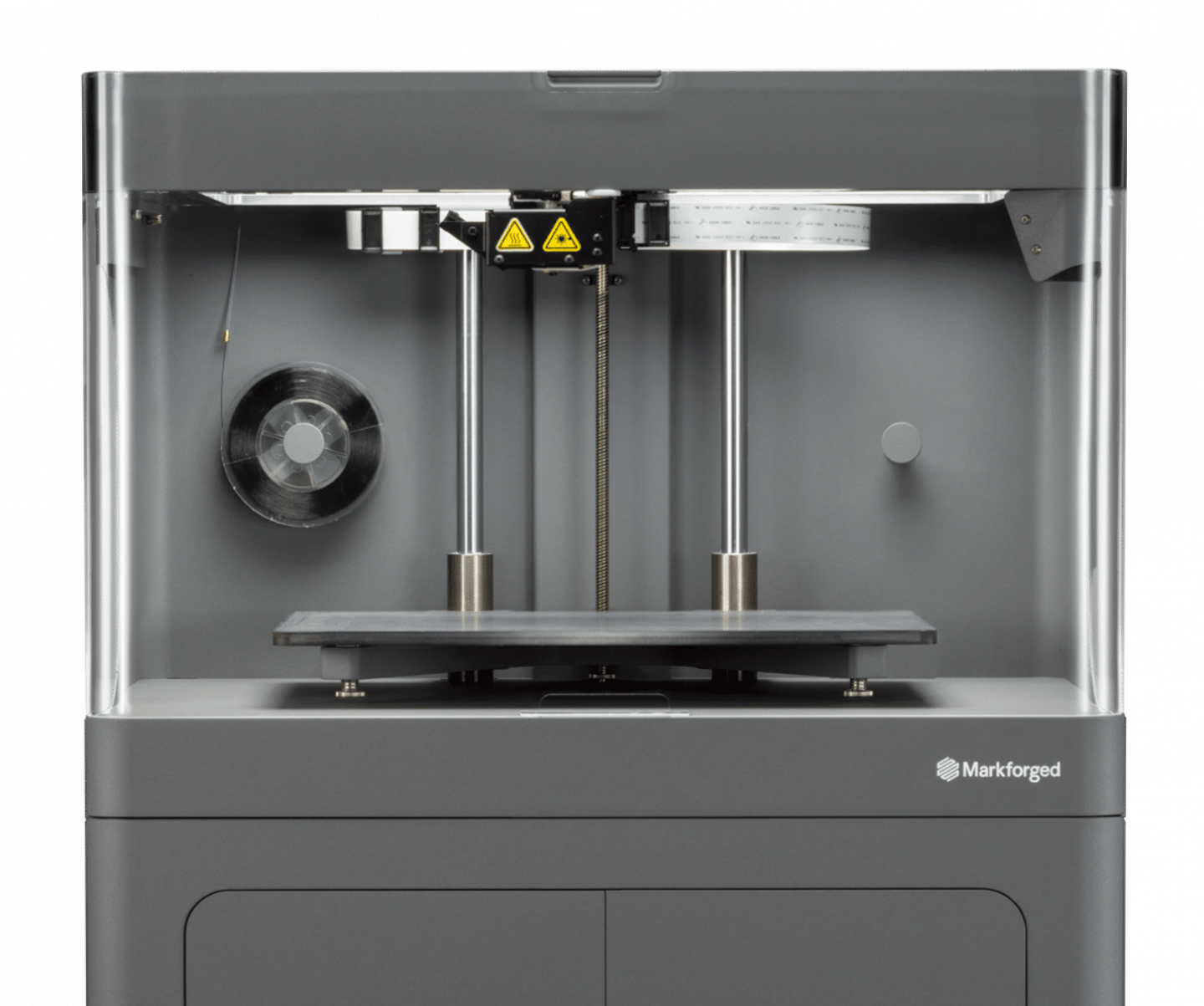
The Markforged X7
The ultimate flagship for
functional parts of all kinds
Base materials:
 Onyx
Onyx
 Onyx FR
 Onyx FR-A
 Onyx ESD
 Precise PLA
 Nylon
Nylon
 Smooth TPU 95A
Continuous fibres:
 Carbon fibre
 Carbon fibre FR
 Kevlar®-fibre
 Glass fibre
 HSHT-Glass fibre
| Specifications | Markforged X7 |
|---|---|
| Build Volume | 330 x 270 x 200 mm |
| Layer Height | 100 μm default, 50 μm minimum, 250 μm maximum |
| Materials (plastics) | Onyx, Onyx FR, Onyx ESD, Nylon White, P-PLA, S-TPU |
| Materials (continuous fibres) | Carbon fibre, Carbon Fibre FR, Fibreglass, Aramid Fibre / Kevlar®, HSHT Fibreglass |
| Power | 100-240 VAC, 150 W |
| Weight | 48 kg |
Speak to Mark3D about the Markforged X7
If you would like to understand whether the Markforged X7 is suitable for your business, Mark3D can help assess your parts, materials and production requirements.
Contact us to discuss a tailored quote for the Markforged X7.
Mark3D UK Limited
Romsley Point
Farley Lane, Romsley, Halesowen, B62 0LG
Phone: +44 121 661 1151
Freephone: 0800 193 3650
Email: printstronger@mark3d.co.uk
World market leaders rely on Markforged 3D printers

Why continuous filaments?
The carbon fibre is only optimally designed to withstand tensile and compressive forces if the force is applied to the component in the direction of fibre flow. If the carbon fibre is interrupted during the construction process, it can no longer absorb the optimum tensile and compressive forces. This is why the continuous fibre is so crucial for the stability of a component printed with carbon fibre, Kevlar® or glass fibre. Continuous fibre-reinforced 3D printing thus ensures strength on a completely new level.
Frequently asked questions about the Markforged X7
What is the Markforged X7 price?
The Markforged FX10 price depends on the system configuration, including whether the optional Metal Kit is required. The most suitable setup will depend on the parts you want to produce, the materials required and how the printer will be used within your production workflow. Mark3D can provide a tailored quote based on your application.
What is the Markforged X7 build volume?
The Markforged X7 build volume is 330 × 270 × 200 mm.
This gives manufacturers enough capacity for many jigs, fixtures, grippers, functional prototypes and medium-sized production tools while keeping the machine compact enough for workshop or engineering environments.
Where can I find a Markforged X7 review?
If you are looking for a practical Markforged X7 review, the key areas to consider are continuous fibre capability, material options, build volume, in-process inspection and ease of use through Eiger.
The X7 is best suited to manufacturers that need strong, functional composite parts rather than visual prototypes alone. The best way to assess suitability is to review the parts you currently machine, outsource or struggle to produce quickly.