
3D Printing for Military Applications with the Markforged X7FE
“Wars are won or lost because of logistics”.
– Eisenhower
Field-ready 3D printing for military applications
3D printing for military applications gives teams the ability to produce useful components closer to the point of need, reducing reliance on long supply chains and external deliveries.
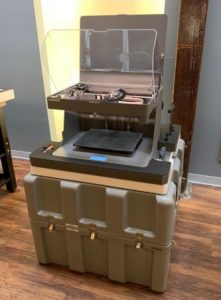
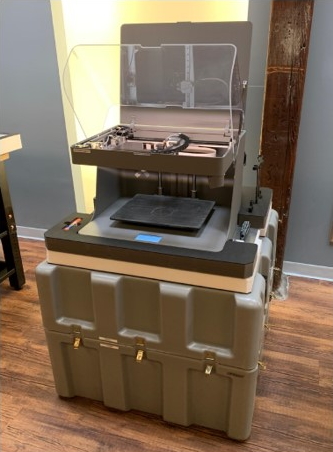
The Markforged X7 Field Edition is based on the Markforged X7 and has been developed for use in field environments. Instead of a standard outer cabinet, it uses a modular setup in which the packing crate transports the system before forming part of the cabinet and working stand during printing.
This makes the X7 Field Edition suitable for military 3D printing applications where teams need access to jigs, fixtures, tools, spare parts or prototype components in remote locations.
Why choose the Markforged X7 for military 3D printing
Military operations often take place in remote areas, where deliveries of spare parts, mounting devices or essential tools can take time.
Military 3D printing allows teams to move from sketch and design to a printed prototype without waiting for conventional delivery routes. The Markforged X7 Field Edition supports this by enabling robust composite parts to be produced directly on site.
The system can manufacture parts reinforced with continuous fibre, including carbon fibre, Kevlar® or glass fibre, helping printed components withstand more demanding applications than standard plastic 3D printed parts.
Print parts directly in the field
The Markforged X7 Field Edition is designed to support mobile 3D printing in field environments.
Components such as jigs, fixtures, tools and spare parts can be printed directly on site, reducing dependence on long supply chains. This is particularly useful where parts are required quickly and conventional manufacturing or delivery would take too long.
For teams operating away from a fixed workshop, this provides a practical route to producing functional components closer to where they are required.
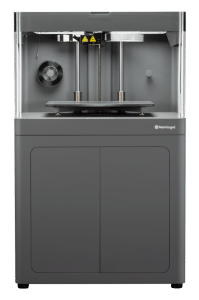
Built around the Markforged X7 platform
The X7 Field Edition is based on the Markforged X7, using a modular field-ready setup instead of the standard outer cabinet.
Its robust housing also serves as a stand, allowing the printer to be used at a suitable working height while providing storage space for spare parts and materials.
The system has been designed for rapid deployment, with the current X7 Field Edition specification stating that first use and the first component print can begin after only three minutes.
Support for strong composite components
The Markforged X7 Field Edition supports continuous fibre reinforcement using materials including carbon fibre, Kevlar® and glass fibre.
This reinforcement allows printed parts to be made stronger and more robust than standard plastic components. For military 3D printing, this can be particularly useful when producing jigs, fixtures, mounting devices, tools and other functional components.
The supplied consumables, spare parts and materials are intended to support reliable use of the 3D printer in the field.
Markforged X7 Field Edition

The robust housing of the Markforged X7 3D printer also serves as a stand, allowing you to work at an ideal height while providing storage space for spare parts or materials.
Thanks to the ingenious concept, the use and first printing of a component is possible after only 3 minutes!
The supplied consumables, spare parts and materials ensure trouble-free use of the 3D printer.
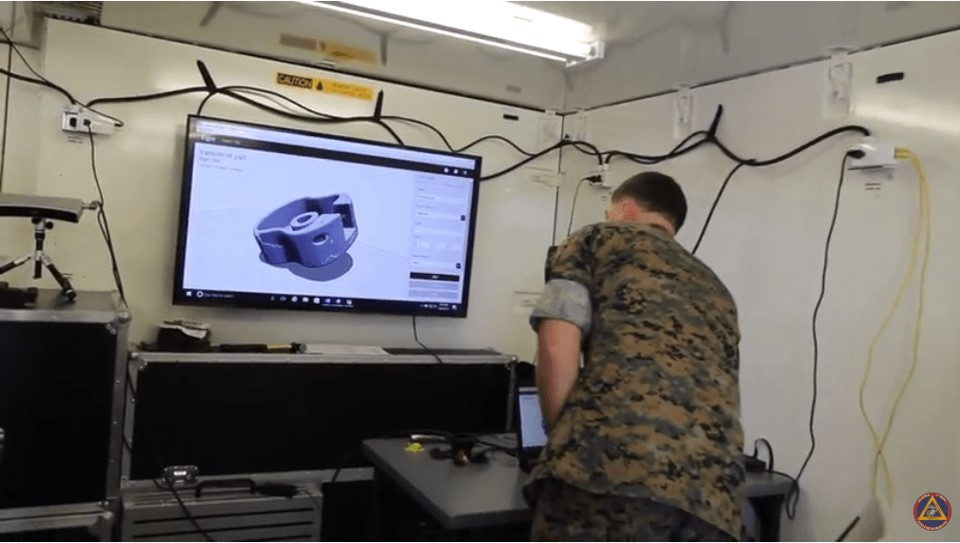
The Digital Forge:
Powered by Software
The Markforged X7 is powered by Eiger 3D printing software, a cloud-based platform designed for part preparation, fibre control, and print management.
Eiger forms part of the wider Digital Forge platform, supporting the workflow from CAD file to finished component. It enables:
- Centralised part storage and management
- Fibre preparation and slicing
- Inspection and tolerance workflows
- Remote print monitoring
- Fleet management across multiple
- Markforged printers
This makes the X7 suitable for single-machine use and also for manufacturers looking to manage multiple Markforged systems across teams or facilities.
Materials for military 3D printing
The Markforged X7 Field Edition can use continuous fibre reinforcement to increase the strength and durability of printed composite components.
Depending on the application, parts can be reinforced using carbon fibre, Kevlar® or glass fibre.
Continuous fibres

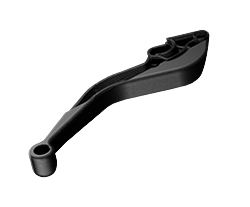


Military 3D printing in practice: Case Study US-Navy
Additive manufacturing for military readiness
Additive manufacturing can give military teams greater access to functional parts, tooling and components when conventional supply routes are restricted or slow.
The existing Markforged military case study demonstrates how additive manufacturing technology has been used within a U.S. Army training environment to support readiness and reduce downtime.
Distributed Production
The existing application example demonstrates distributed production across 20 machines, with:
- Less than two days of printing time
- Strength optimised for load paths
- Little or no support material
- Reduced risk of misprints
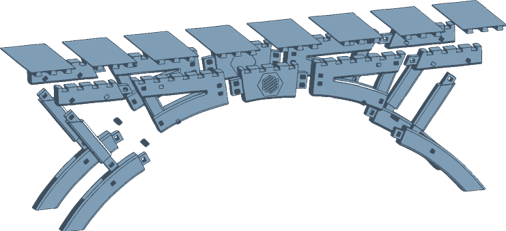
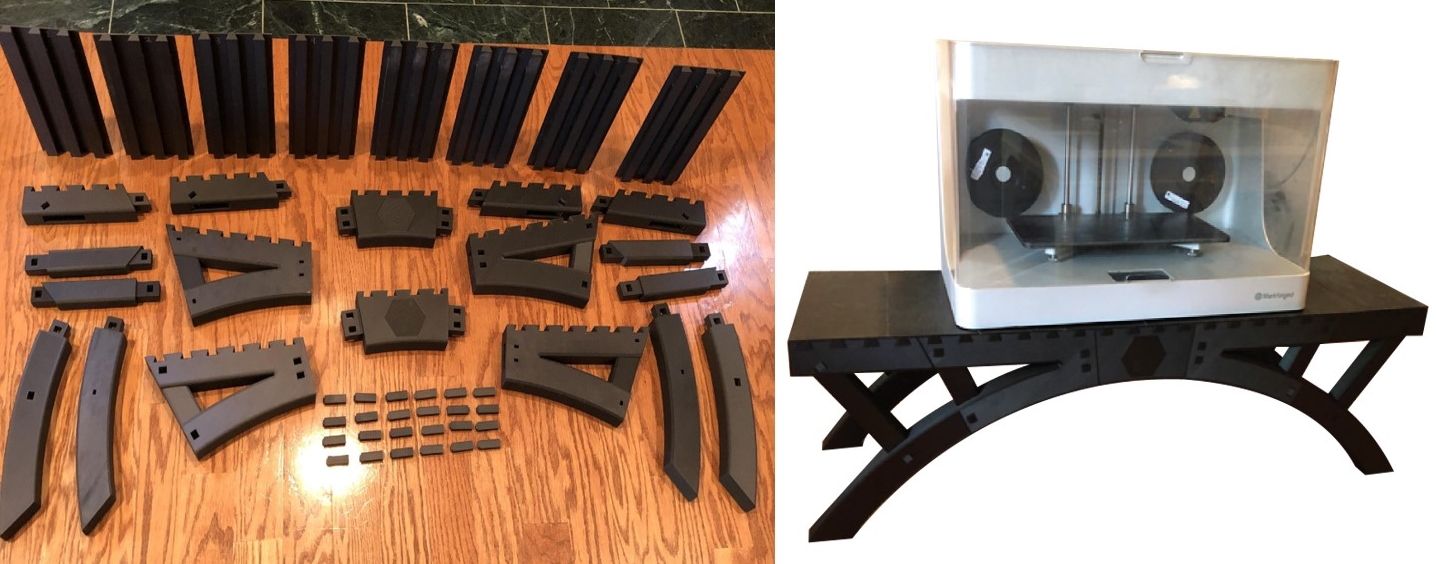
Assembled in less than 10 minutes!
Night vision
3D printing can provide a responsive way to develop and manufacture custom components when requirements change.
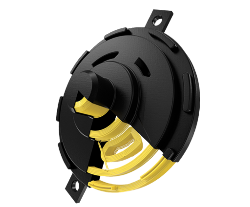
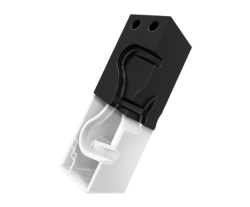
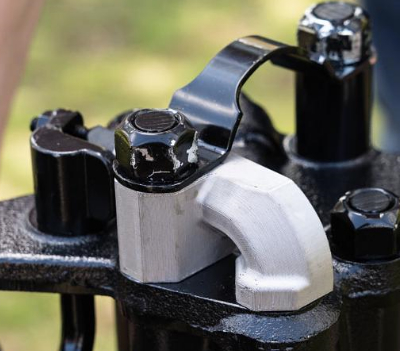
The 27th Special Operations Wing at Cannon Air Force Base has demonstrated applications developed using a Markforged industrial 3D printer. One example involved custom mounting components for night vision goggles that could be produced using additive manufacturing.
Individual Tools
Military 3D printing can also support the production of individual tools and functional workshop components.
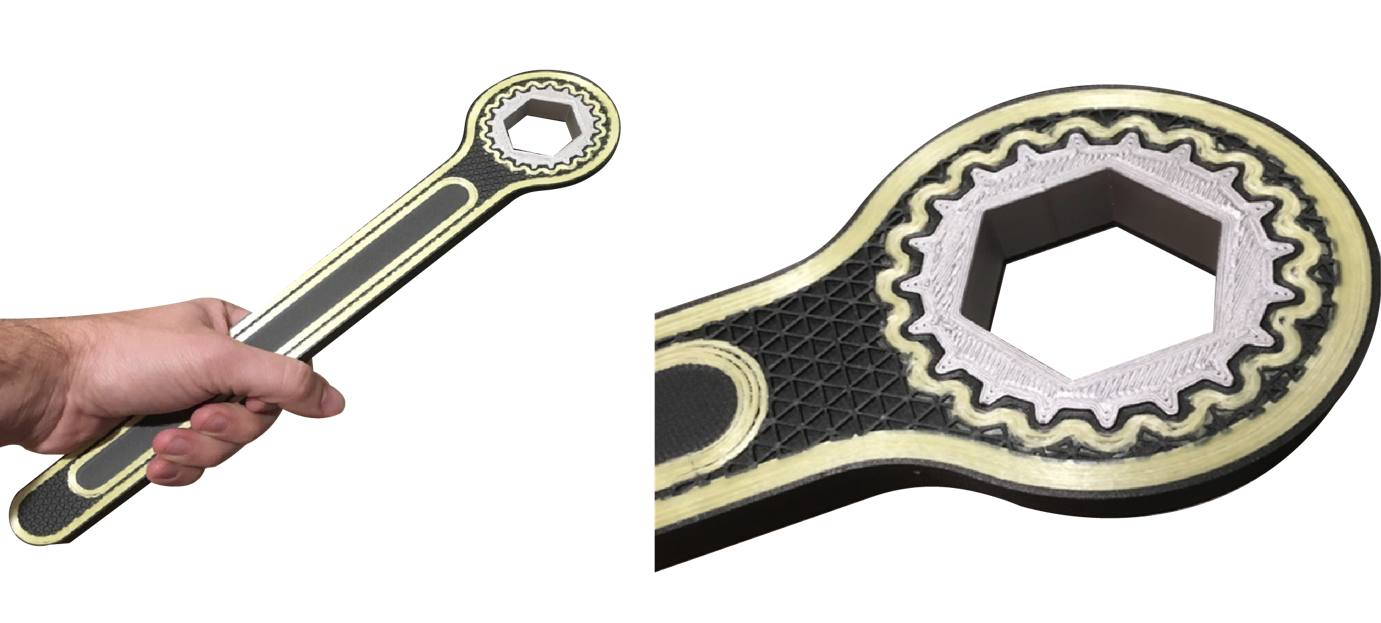
One example shown on the existing page is a Kevlar®-reinforced spanner handle with an H13 insert, produced using the Markforged X7 and Metal X systems.
Speak to Mark3D about the Markforged X7FE
If your organisation is evaluating 3D printing for military applications, Mark3D can help assess the use case, required parts and operating environment.
The Markforged X7 Field Edition is a specialist configuration of the Markforged X7 designed around field deployment rather than standard workshop installation. Mark3D can support discussions around applications, materials, print workflow and whether the X7 Field Edition is appropriate for your requirements.
Contact us to discuss 3D printing for military applications with the Markforged X7 Field Edition.
Mark3D UK Limited
Romsley Point
Farley Lane, Romsley, Halesowen, B62 0LG
Phone: +44 121 661 1151
Freephone: 0800 193 3650
Email: printstronger@mark3d.co.uk
World market leaders rely on Markforged 3D printers

Frequently asked questions about military 3D printing
What is military 3D printing for military applications?
3D printing for military applications uses additive manufacturing to produce parts closer to where they are needed, helping reduce reliance on long supply chains and external suppliers.
It can be used to produce items such as jigs, fixtures, tools, mounting devices, spare parts and prototypes, particularly where rapid access to components is important.
How can 3D printing for military applications support field operations?
3D printing for military applications can help teams respond more quickly when parts, tools or fixtures are required in remote locations.
Instead of waiting for a component to be delivered, teams can move from design to printed part on site, helping reduce delays and improve operational flexibility.
What is the Markforged X7 Field Edition?
The Markforged X7 Field Edition is a field-focused version of the Markforged X7, designed for use outside a standard workshop environment.
It uses a modular setup where the shipping crate becomes part of the working printer setup, acting as the cabinet and stand during printing.
What materials can the X7 Field Edition use?
The X7 Field Edition supports continuous fibre reinforcement using materials including carbon fibre, Kevlar® and glass fibre, allowing functional composite parts to be produced for a range of applications.
Can Markforged help assess 3D printing for military applications?
Yes. Mark3D can discuss the application, materials, print workflow and operating environment to help determine whether the Markforged X7 Field Edition is suitable for your requirements.
Learn more about applications with metal 3D printing!
For which applications is the Metal X suitable? How do I design correctly for metal 3D printing? What do users say and where can I find more information? – This is the right place for you! We listed some information leading you directly to the matching answers.
Design Guide
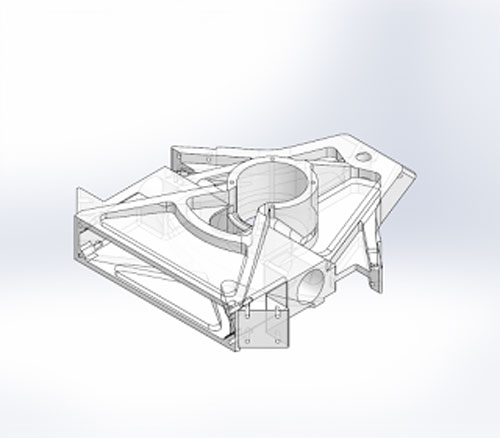
DfAM – How do you design your part best for metal 3D printing? In this guide you will find valuable tips on design, material selection and post-processing.
Problemes to solve
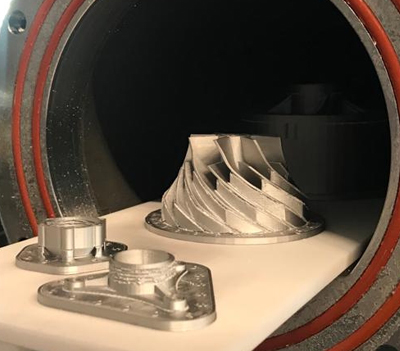
In this white paper, we take a look at three benefits of metal additive manufacturing and three problems the technology is perfectly suited to solve.
Case Study
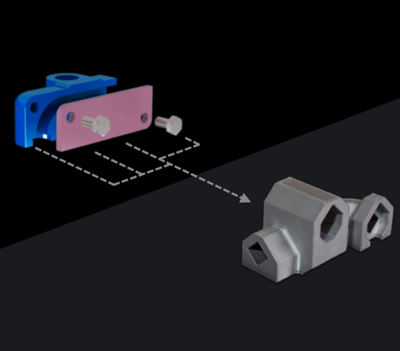
In this practical case study from Stanley Black & Decker, cost and lead time were saved by optimizing an assembly.
Webinar
An application engineer from Markforged explains the Metal X system and which materials are available. He also shows a complete run from printing to the finished part.