
Additive manufacturing has been talked about as a revolutionary technology for over a decade. Yet in many organisations it still sits on the edge of operations — used for prototypes, concept models, or one-off parts.
In practice, the strongest additive manufacturing ROI comes from specific additive manufacturing applications on the factory floor.
Manufacturers facing supply chain disruption, long lead times for tooling, or constant pressure to reduce costs, are increasingly exploring in-house additive manufacturing as a way to shift the economics of production in ways traditional processes cannot.
The key is understanding where additive genuinely works — and where it doesn’t.
Additive Manufacturing Applications That Deliver Real ROI
Many organisations struggle to justify additive manufacturing because they start with the wrong use cases. In many cases this stems from treating 3D printing as a prototyping-only tool rather than a production-capable process.
We explored this challenge in our earlier article, “When Prototypes Become Production Parts’, which looks at how engineering teams can move beyond prototype-only workflows and design with production intent.
When additive manufacturing is viewed through the lens of practical applications rather than experimentation, its value becomes much clearer.
Three applications consistently deliver measurable ROI.
Manufacturing Tooling: A High-Value Additive Manufacturing Application
Tooling is often the fastest route to value.
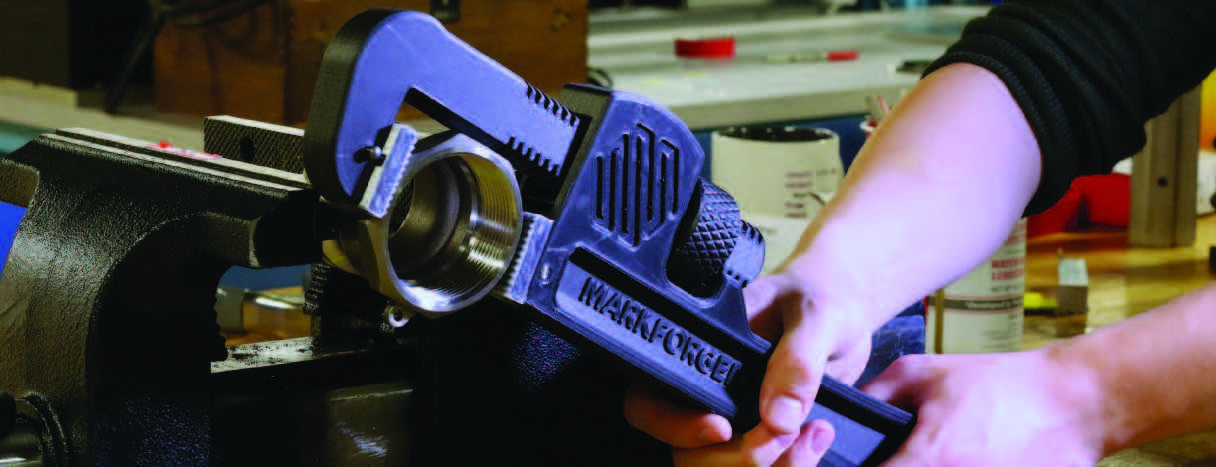
Production environments rely on jigs, fixtures, soft jaws, assembly aids, and inspection tools. Traditionally these are machined externally or produced internally using CNC, often with lead times measured in weeks.
With industrial additive manufacturing, many of these tools can be produced overnight.
This creates several practical benefits:
- Reduced fixture lead times from weeks to hours
- Lower cost for low-volume tooling
- Lightweight, ergonomic tools for operators
- Rapid iteration when production processes change.
For many manufacturers, printed tooling becomes the first additive manufacturing application that justifies bringing the technology in-house.
Spare Parts Production Using Additive Manufacturing
Another area where additive manufacturing delivers strong ROI is spare parts production.
Manufacturers frequently depend on external suppliers for low-volume components or legacy parts. When suppliers discontinue parts or lead times extend, production risk increases.
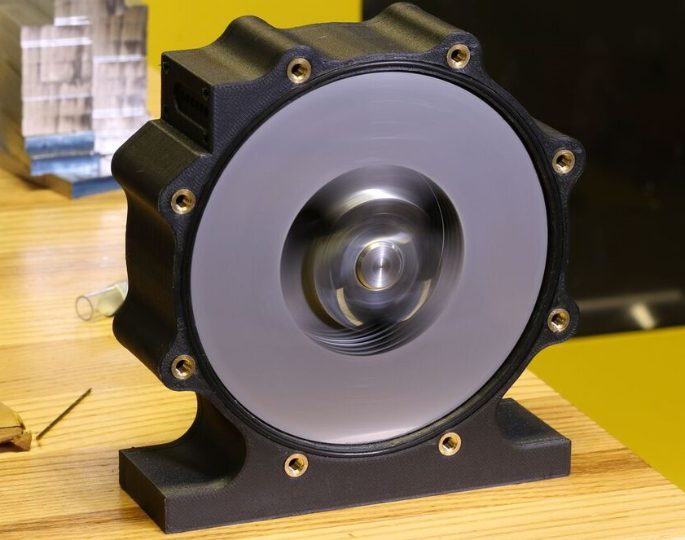
Additive manufacturing allows organisations to produce suitable parts on demand, one of the most valuable additive manufacturing applications for production environments.
This approach enables companies to:
- Reduce reliance on external suppliers
- Eliminate mimimum order quantities
- Digitise spare part inventories
- Avoid production downtime caused by supply delays
Rather than holding physical inventory, manufacturers can maintain digital part libraries and produce components when needed.
Reducing Supplier Dependency With In-House Production
Supply chain volatility has changed how manufacturers think about production control.
Many organisations have experienced how vulnerable operations become when a single supplier or long logistics chain is involved.
In-house additive manufacturing shifts part of that control back inside the factory.
Instead of waiting for suppliers to produce and deliver components, manufacturers can produce many tools and parts directly on site.
This doesn’t replace traditional manufacturing, but it introduces a valuable layer of flexibility:
- Critical components can be produced immediately
- Tooling updates no longer depend on supplier lead times
- Engineering teams can respond rapidly to production issues
- Production becomes less vulnerable to supplier disruption
In practice, additive manufacturing often acts as a resilience layer within the wider manufacturing strategy.
Additive Manufacturing as Part of a Modern Production System
One of the biggest misconceptions about additive manufacturing is that it replaces conventional manufacturing.
In reality, the most successful implementations integrate additive alongside machining, moulding, and other established production processes.
Each method has its strengths.
Additive manufacturing excels at:
- Complex geometry
- Low-volume production
- Rapid iteration
- On-demand manufacturing
Traditional manufacturing remains the most efficient solution for high-volume parts where unit cost dominates.
Companies that recognise this balance see additive manufacturing not as a replacement, but as an additional capability within their manufacturing toolkit.
Moving from Experimentation to Operational Value
Additive manufacturing often begins as an experimental capability within engineering teams.
The real value appears when it becomes part of everyday production workflows.
This shift typically happens when companies apply additive manufacturing to practical additive manufacturing applications such as tooling, spare parts management or low-volume components.
When these applications are implemented consistently, the technology stops being a demonstration project and becomes a practical manufacturing tool delivering measurable ROI on the factory floor.
Evaluating Additive Manufacturing in Your Own Environment
The next step is understanding how additive manufacturing fits within your own production environment, particularly when comparing the cost of producing tooling, replacement parts or short-run components in-house versus outsourcing them.
Looking at the economics of these appliations is often the starting point for building a realistic business case.
Explore the Economics of Additive Manufacturing
Understanding where additive manufacturing delivers return on investment often comes down to the economics of specific applications – from production tooling to spare parts and low-volume production. For a deeper look at how the costs compare with traditional manufacturing methods download the whitepaper: The Economics of 3D Printing




Leave A Comment