
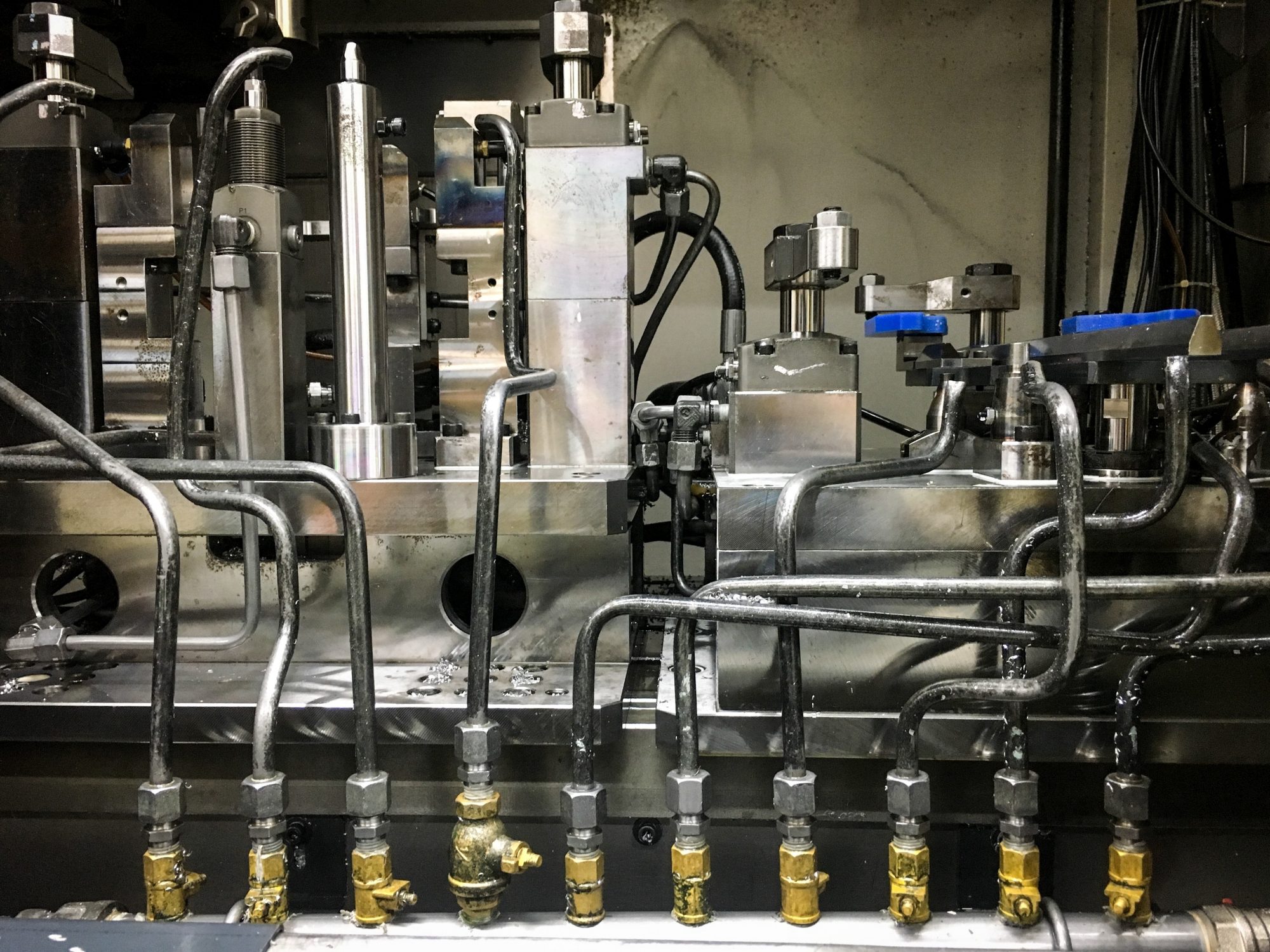
Tooling rarely gets the attention it deserves. Bringing tooling back in-house is not usually a headline decision – but it is becoming an increasingly important one.
Fixtures, jigs and one-off production aids don’t usually appear on capital investment plans, yet they quietly dictate how smoothly production runs. When tooling is late, everything else waits – even if machines and people are available.
Across UK manufacturing, this has become an increasingly familiar problem.
The Hidden Bottleneck on the Factory Floor
Most production managers will recognise the pattern.
CNC machines are busy, but not always on high-value work. A steady stream of fixtures, drill guides and inspection tooling sits in the queue alongside revenue-generating parts. Individually, these items are minor. Collectively, they consume time, attention and capacity.
Outsourcing doesn’t necessarily solve the issue. Supplier lead times stretch from weeks into months, expediting costs creep in, and iteration becomes slow and expensive. In many cases, production waits not for complex components, but for relatively simple tooling.
The result is a bottleneck that’s hard to see on a schedule, but easy to feel on the shop floor.
Rethinking Why More Manufacturers Are Bringing Tooling Back In-House
A growing number of manufacturers are now questioning whether all tooling really needs to be machined.
For many fixtures and jigs, the requirements are straightforward:
- Dimensional accuracy
- Stiffness and repeatability
- Robustness for shop-floor use
They don’t necessarily require aluminium, nor do they justify occupying CNC capacity for days at a time.
This has led to a shift towards producing certain types of tooling in-house using production-grade composite systems. The goal isn’t to replace machining, but to reserve it for the work where it adds the most value.
What Changes When Tooling Moves In-House
Manufacturers that adopt this approach typically report the same set of outcomes.
Tooling lead times fall dramatically – from weeks to days, and sometimes to hours. Production planning becomes more predictable because fixtures are no longer tied to supplier schedules. CNC machines spend more time on parts that genuinely require them.
There’s also a knock-on effect in engineering. When tooling can be produced quickly and inexpensively, teams are more willing to iterate and refine, rather than accept compromises driven by cost or lead time.
Importantly, this shift doesn’t require wholesale process change. Composite tooling is often introduced quietly, targeting low-risk, high-frequency applications first.
Why Composite Tooling Works in Production
The key difference between experimental 3D printing and production-ready composite systems is reliability.
Modern composite tooling platforms are designed to deliver:
- Consistent dimensional accuracy
- Repeatable mechanical performance
- Materials capable of withstanding daily shop-floor use
For many manufacturers, this makes composite tooling a practical alternative to machined aluminium for fixtures, jigs and production aids – particularly in high-mix, low-volume environments.
A Practical Decision, Not an Innovation Project
What’s notable is how these systems are positioned internally.
They’re rarely justified as innovation initiatives. Instead, they’re framed as a way to:
- Reduce delays
- Protect machining capacity
- Improve delivery reliability
In other words, they’re treated as production infrastructure.
That framing matters. It allows teams to focus on outcomes – throughput, predictability and cost – rather than technology for its own sake.
Where FX10 Fits Into This Picture
One example of this approach is the use of the Markforged FX10, a production-grade composite manufacturing system designed specifically for industrial environments.
The FX10 is typically used for:
- Jigs and fixtures
- Assembly and inspection tooling
- Automation and production aids
It allows manufacturing teams to produce strong, repeatable tooling in-house, often reducing lead times from weeks to days and freeing up CNC capacity for higher-value work.
For organisations under pressure to improve throughput without adding machines or people, systems like FX10 are increasingly viewed not as prototyping tools, but as part of the production infrastructure.
The Bigger Picture
As manufacturing schedules become tighter and supply chains less predictable, small delays have a habit of creating disproportionate disruption.
Tooling may not be the most visible part of production, but it often has an outsized impact on how smoothly workflows through the factory.
For many manufacturers, bringing tooling back in-house isn’t about doing something new. It’s about removing friction from processes that already exist.
Sometimes, the fastest gains come not from new machines or more people, but from rethinking how the small, critical parts get made.
If tooling lead times are quietly slowing production, it may be worth looking at whether bringing them in-house could remove more friction than expected.




Leave A Comment