
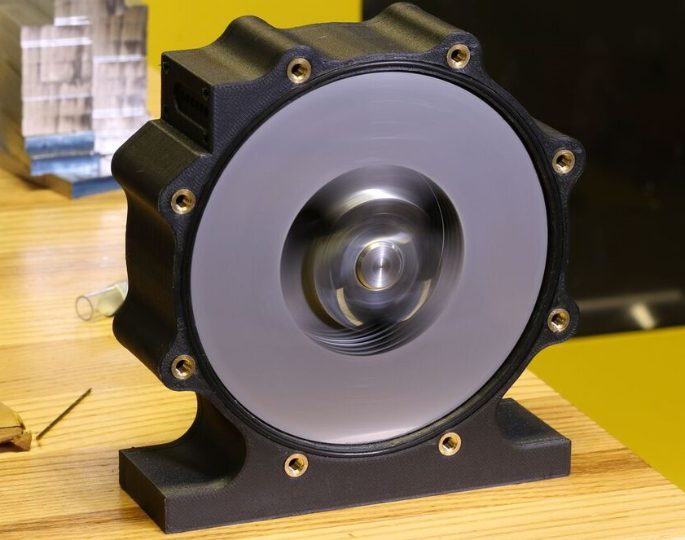
Why “Prototype-Only” 3D Printing Holds Engineering Teams Back – and How to Close the Gap
For years, prototype-only 3D printing has been treated as a fast, disposable step in the engineering process. Print the prototype, test the fit, prove the concept – then redesign the part for “real manufacturing”.
That mindset made sense a decade ago. Today, prototype-only 3D printing is quietly holding engineering teams back by forcing unnecessary redesigns, longer lead times, and a growing disconnect between validated designs and manufactured parts.
Today’s additive manufacturing systems are no longer just tools for visualisation or early validation. They’re production-capable, repeatable, and increasingly economical at low-to-medium volumes. Yet many organisations still enforce an invisible ceiling: this is only a prototype.
The result? Slower timelines, higher costs, and a widening gap between design intent and production reality.
The Hidden Cost of “Prototype-Only” 3D Printing
When teams assume a design will eventually be remade using a different process, subtle compromises creep in early:
- Designs optimised for printing – but never intended to survive production
- Features that work in prototypes but are removed “for manufacturability” later
- Multiple redesign cycles when switching to tooling-based processes
- Lost performance because the final part no longer matches the validated prototype
In other words, engineers prove one thing – and manufacture another.
That disconnect is expensive. Not just in dollars, but in time, trust, and technical momentum. These issues are common symptons of prototype-only 3D printing, where parts are never designed with production intent.
Additive Manufacturing Has Grown Up (Our Habits Haven’t)
Modern 3D printing offers:
- Production-grade materials (polymers, metals, composites)
- Statistical process control and repeatability
- Certified workflows for regulated industries
- Cost structures that reward design consolidation and low-volume agility
The problem isn’t additive manufacturing capability – it’s the continued reliance on prototype-only 3D printing workflows. Yet culturally, many teams still treat additive as a temporary stop on the way to “real” manufacturing.
This forces a false choice:
- Prototype fast, then redesign for production, or
- Design for production early, sacrificing speed and iteration
But that trade-off no longer needs to exist.
The Power Move: Design Prototypes as Production Parts
High-performing teams flip the script. They ask a different question at the start:
What if this prototype had to ship?
That single constraint changes everything.
Designs become:
- More robust from the first iteration
- Aligned with real-world loads and environments
- Easier to scale without rework
- Faster to validate because the prototype is the production intent
When prototypes and production share the same process, feedback loops collapse. Testing becomes more meaningful. Engineering confidence goes up.
And handoffs? They mostly disappear.
Where This Matters Most
This approach is especially powerful when:
- Volumes are low to moderate
- Designs change frequently
- Performance mattters more than unit cost
- Time-to-deployment is critical
- Tooling costs are hard to justify
Sound familiar? Aerospace, defense, industrial equipment, robotics, medical devices – it’s already happening there.
The teams winning aren’t “printing prototypes faster.”
They’re shipping printed parts on purpose.
Closing the Gap Starts with a Mindset Shift
The real limitation isn’t the printer, the material, or the software.
It’s the assumption that production must look different from prototyping. Moving beyond prototype-only 3D printing requires treating additive manufacturing as a production process, not a temporary step.
When engineering teams allow additive manufacturing to span the entire lifecycle – from concept to end-use – they unlock:
- Faster programs
- Fewer redesigns
- Better-performing parts
And manufacturing that finally keeps up with engineering speed.
The question isn’t whether 3D printing is ready for production.
It’s whether we are.
If your team is still redesigning validated parts just to “make them manufacturable,” it may be time to rethink where prototyping ends – and production really begins.
This article is part of our Removing the Bottlenecks campaign – exploring how manufacturers are reducing tooling delays and freeing up production capacity without adding machines or people.



Leave A Comment