

Industrial 3D printing has evolved far beyond prototyping. Today’s engineering-grade materials allow manufacturers to produce production tooling, fixtures, inspection aids, end-use components and replacement parts that perform reliably in demanding industrial environments.
As additive manufacturing has matured, the question has shifted from “Can this part be 3D printed?” to something far more important:
“Which material is best suited to the application?”
Choosing the right material is one of the most important decisions in any additive manufacturing project. While strength and stiffness remain key considerations, factors such as weight, operating temperature, chemical resistance, compliance requirements and even colour can all influence long-term success.
Start with the Application, Not the Material
It’s easy to begin by comparing material specifications, but successful additive manufacturing projects usually start somewhere else.
Ask questions such as:
- Will the part be handled regularly by operators?
- Does weight matter?
- Is the component exposed to elevated temperatures?
- Will it come into contact with chemicals?
- Is stiffness more important than ultimate strength?
- Does the part need to be easily identified on the factory floor?
Composite Materials for Everyday Manufacturing
Composite materials have become the backbone of industrial additive manufacturing because they offer an excellent balance of strength, stiffness and lightweight performance.
Materials such as Onyx are ideal for manufacturing:
- Assembly fixtures
- Inspection tooling
- Drill guides
- Robotic end effectors
- Production aids
- Functional prototypes
When additional strength is required, continuous carbon fibre reinforcement can dramatically increase stiffness while maintaining a fraction of the weight of machined components.
For many tooling applications, lightweight composite materials improve operator ergonomics, reduce handling fatigue and allow engineering changes to be implemented far more quickly than conventional machining.
When High-Performance Materials Are Required
Some manufacturing environments place greater demands on printed components.
Applications involving elevated temperatures, flame-retardant requirements or harsh operating conditions may require specialist engineering materials.
High-performance materials such as Onyx FR-A and ULTEM™ 9085 enable manufacturers in industries including aerospace, defence and rail to produce lightweight components capable of meeting demanding application requirements.
Selecting these materials isn’t simply about mechanical performance – it’s about ensuring the part performs reliably within its intended operating environment.
Metal Still Has an Important Role
Additive manufacturing isn’t about replacing every machined component.
Where high mechanical loads, aggressive chemicals or demanding operating conditions exist, metal may still be the most appropriate choice.
Materials such as 17-4 PH Stainless Steel and 316L Stainless Steel allow manufacturers to produce durable tooling, replacement parts and low-volume production components while reducing setup times and improving responsiveness.
The goal isn’t to replace traditional manufacturing – it is to use the right manufacturing process for the right application.
Why Colour Is Becoming an Engineering Decision
One of the latest developments in industrial additive manufacturing isn’t about strength – it’s about workflow.
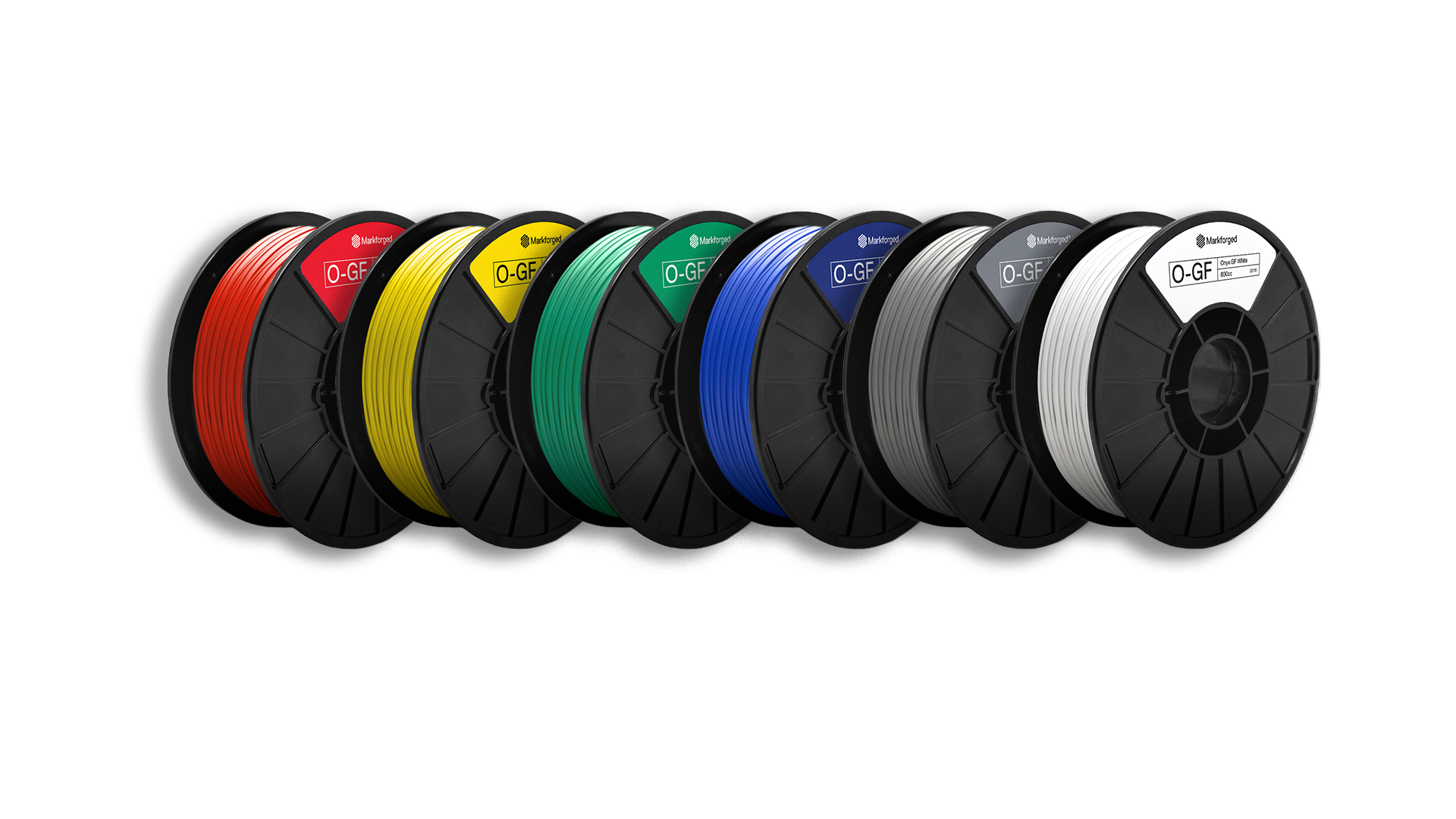
Manufacturers are increasingly recognising the operational benefits of colour-coded tooling and production aids.
Different coloured fixtures can help distinguish production lines, improve visual management, support 5S initiatives and reduce the risk of components being used in the wrong location.
The introduction of engineering-grade coloured materials such as Onyx GF allows manufacturers to gain these visual benefits without compromising the strength, stiffness or print quality expected from industrial composite materials.
As additive manufacturing becomes more deeply integrated into production environments, colour is becoming another practical engineering consideration rather than simply a cosmetic choice.
Material Selection Is a Manufacturing Decision
Perhaps the biggest change in recent years is the way manufacturers think about additive manufacturing.
Instead of viewing material selection purely as an engineering specification exercise, organisations are increasingly considering how materials affect production efficiency, lead times, operator experience and manufacturing flexibility.
A lightweight fixture that can be produced overnight may create more operational value than a machined aluminium equivalent that takes weeks to manufacture.
Choosing the right material is no longer simply about producing a part – it’s about selecting the most effective manufacturing solution for the application.



Leave A Comment