
Markforged 316L Stainless Steel
Corrosion-resistent metal 3D printing for demanding industrial environments.
When should I 3D print with 316L Stainless Steel?
316L Stainless Steel is a low-carbon austenitic stainless steel known for excellent corrosion resistance, toughness, and ductility. It is ideal for parts exposed to moisture, chemicals, saltwater, or demanding industrial environments where durability and surface finish matter.
Ideal Applications
Corrosion-Resistant Parts
Manufacturing Tooling & Fixtures
Food & Beverage Components
Marine & Offshore Applications
Medical & Laboratory Equipment
Low-Volume Production

Request a demo!
Experience the benefits of Markforged 316L Stainless Steel for yourself.

Excellent corrosion resistance
316L Stainless Steel is trusted across manufacturing industries for its ability to resist corrosion in harsh environments while maintaining good strength and toughness. It performs exceptionally well in applications exposed to chemicals, moisture, saltwater, and cleaning agents.
With the Markforged FX10 metal 3D printing platform, manufacturers can produce complex metal parts faster and more affordably than traditional methods.
Why choose 316L Stainless Steel for metal 3D printing?
Corrosion Resistance
316L offers superior resistance to corrosion compared to many standard stainless steels, making it ideal for marine, chemical processing, and food-safe environments.
Tough & Ductile
Unlike harder precipitation-hardening steels, 316L provides excellent toughness and ductility, making it suitable for functional components that require impact resistance and reliability.
Machineable & Polishable
Printed parts can be machined, polished, and post-processed to achieve the required tolerances and surface finishes.
Complex Metal Parts Made Simple
Produce intricate geometries, internal channels, and consolidated assemblies that would be difficult or expensive to manufacture conventionally.

Compatible with our FX10 system.
Learn more about applications with metal 3D printing!
For which applications are either the FX10 or the Metal X suitable? How do I design correctly for metal 3D printing? What do users say and where can I find more information? – This is the right place for you! We have included some information below that will answer your questions.
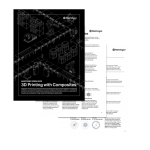
Design Guide
DfAM – How do you design your part best for metal 3D printing? In this guide you will find valuable tips on design, material selection and post-processing.
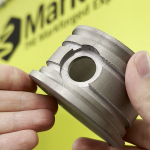
Problems to solve
Here we take a look at three benefits of metal additive manufacturing and three problems the technology is perfectly suited to solve.
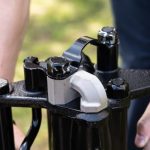
Case Study
In this practical case study Stanley Black & Decker, achieve cost savings, more efficient work and more flexibility by optimizing an assembly.
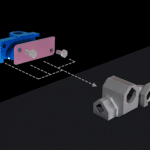
Webinar
An application engineer explains the Metal X system and which materials are available. He shows a complete run from printing to the finished part.