
3D Printing for Education
“”The best engineering graduates don’t just understand manufacturing – they’ve already experienced it.”
Preparing Students. Accelerating Research. Strengthening Industry Collaboration.
Engineering departments are under increasing pressure to deliver graduates with industry-ready skills, support cutting-edge research and strengthen collaboration with industry.
3D printing for education gives universities a practical way to bring advanced additive manufacturing into teaching, research and student engineering projects. Students gain hands-on experience with modern manufacturing technologies, while researchers can manufacture functional components, tooling and bespoke parts in-house,
Whether supporting undergraduate teaching, postgraduate research or collaborative engineering projects, industrial 3D printing for education enables universities to design, manufacture and test functional components in-house, helping prepare students for the manufacturing environments they will encounter after graduation.
Why Engineering Departments Are Investing in Industrial 3D Printing for Education
Industrial additive manufacturing has evolved far beyond prototyping. Today it is used throughout industry to manufacture:
- Production tooling
- Assembly fixtures
- Inspection gauges
- End-of-arm-tooling
- Functional prototypes
- End-use components
Introducing these technologies into engineering education allows students to experience modern manufacturing workflows while giving researchers rapid access to bespoke tooling and functional parts.
This creates a more flexible engineering environment that can support teaching, research and industry engagement across the department.

Supporting Every Stage of Engineering Education
Industrial 3D printing for education can support practical learning and engineering development across the curriculum.
Undergraduate Teaching
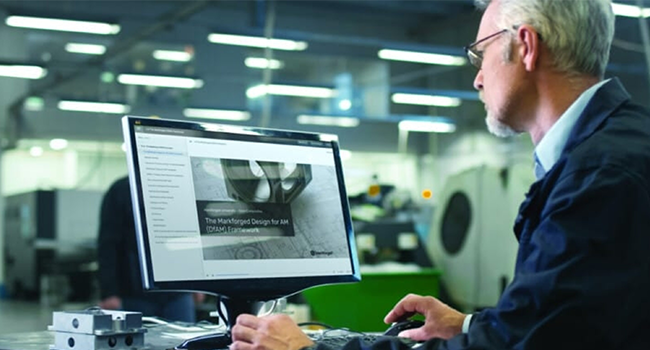
Help students understand Design for Additive Manufacturing (DfAM), engineering materials and modern production methods through practical learning.
Postgraduate Research

Rapidly manufacture bespoke fixtures, laboratory equipment and functional prototypes to accelerate research programmes.
Student Competition Teams

Support Formula Student, robotics, aerospace and innovation projects with strong, lightweight engineering components.
Industry Collaboration
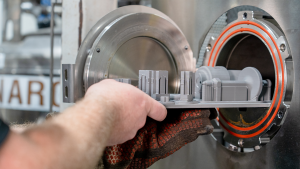
Deliver collaborative R&D projects, Knowledge Transfer Partnerships and innovation programmes with greater speed and flexibility.
See Industrial Additive Manufacturing in Action
How Rochester Institute of Technology is Preparing the Next Generation of Engineers
Leading universities around the world are integrating industrial additive manufacturing into teaching and research to better prepare students for careers in advanced engineering.
See how Rochester Institute of Technology (RIT) is using Markforged technology to give students hands-on experience of industrial 3D printing while supporting research, innovation and engineering development.
Typical Applications of 3D printing in Education
| Teaching | Research | Student Projects | Industry Collaboration |
|---|---|---|---|
| Design for Additive Manufacturing | Laboratory Tooling | Formula Student | Knowledge Transfer Partnership |
| Composite Manufacturing | Experimental Fixtures | Robotics Competitions | Collaborative R&D |
| Manufacturing Modules | Functional Prototypes | Aerospace Projects | SME Innovation |
| Engineering Design | Test Equipment | Final Year Projects | Technology Demonstrators |
| Materials Science | Inspection Fixtures | Capstone Projects | Manufacturing Support |
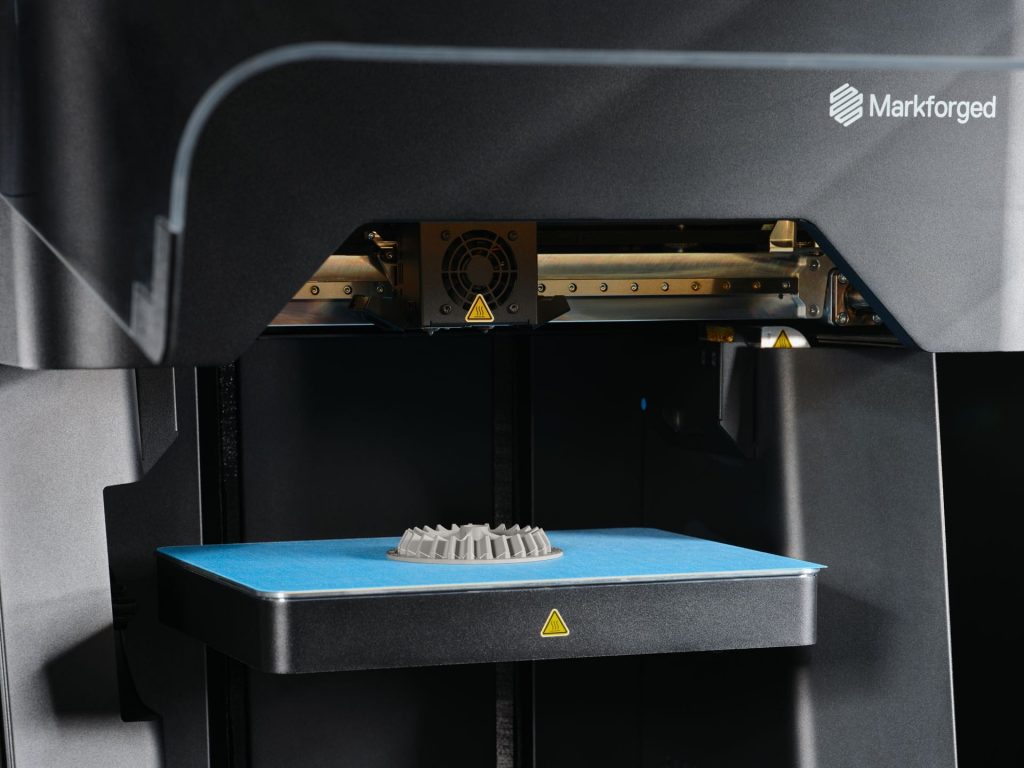
Industrial Composite 3D Printing for Engineering Education
The Markforged FX10 combines industrial reliability with engineering-grade composite materials and continuous carbon fibre reinforcement, providing universities with a platform for expanding teaching capability, supporting research and strengthening industry collaboration.
Designed for multi-user environments, the FX10 enables students and researchers to manufacture functional engineering parts quickly, reliably and repeatedly.
Key Benefits
- Continuous carbon fibre reinforcement
- Engineering-grade composite materials
- Large industrial build volume
- Reliable, repeatable production
- User-friendly cloud-based software
- Fast learning curve for students and staff
- Professional UK training and support
Whether producing laboratory tooling, manufacturing fixtures or research equipment, the FX10 provides a versatile manufacturing platform capable of supporting multiple departments across a university.
Why Choose Mark3D?
Mark3D works with engineering organisations across the UK to introduce industrial additive manufacturing successfully.
Our education services include:
- Education-focused demonstrations
- Installation and commissioning
- Operator training
- Curriculum and application guidance
- Materials advice
- Ongoing UK technical support
- Application engineering expertise
From initial consultation through to long-term support, we’ll help your department maximise the value of its investment.
Frequently Asked Questions about 3D Printing for Education
What are the benefits of 3D printing for education?
Industrial 3D printing for education gives students practical experience with modern manufacturing technologies while enabling researchers to produce tooling, fixtures and functional engineering components in-house.
Which engineering courses benefit most?
Mechanical Engineering, Manufacturing Engineering, Aerospace Engineering, Automotive Engineering, Product Design, Robotics, Mechatronics and Materials Engineering can all benefit from industrial additive manufacturing.
Is the FX10 suitable for research?
Yes. Researchers use the FX10 to manufacture laboratory fixtures, test rigs, tooling, inspection aids and functional prototypes without relying on outsourced machining.
Do you provide installation and training?
Yes. Mark3D provides installation, operator training and ongoing UK technical support to help universities integrate industrial additive manufacturing into teaching and research.
Ready to bring 3D printing into engineering education?
If you are exploring 3D printing for education, Mark3D can help you assess how additive manufacturing could support teaching, research and industry collaboration within your department.
Speak to one of our additive manufacturing specialists to discuss how the Markforged FX10 could support your requirements.
Use the form on the right to book an Education Demonstration.
Ready to Modernise Engineering Education?
Whether you’re looking to prepare students for careers in modern manufacturing, accelerate research or strengthen collaboration with industry, Mark3D can help.
Speak to one of our additive manufacturing specialists to discover how the Markforged FX10 could support your department.
Use the form on the right to Book an Education Demonstration
Mark3D UK Limited
Romsley Point
Farley Lane, Romsley, Halesowen, B62 0LG
Phone: +44 121 661 1151
Freephone: 0800 193 3650
Email: printstronger@mark3d.co.uk
World market leaders rely on Markforged 3D printers

Learn more about applications with metal 3D printing!
For which applications is the Metal X suitable? How do I design correctly for metal 3D printing? What do users say and where can I find more information? – This is the right place for you! We listed some information leading you directly to the matching answers.
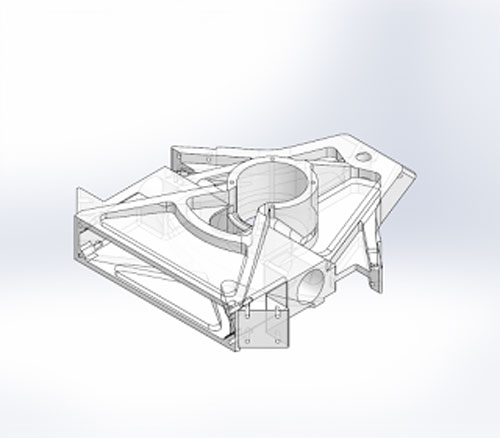
Design for Additive Manufacturing (DfAM)
Learn the essential design principles for successful metal 3D printing. This practical guide explains how to optimise parts for the Markforged Metal platform and achieve reliable, high-quality results.

Accelerating Engineering Research
Discover how the University of Las Palmas de Gran Canaria is using Markforged additive manufacturing to accelerate engineering research, support innovation and develop advanced manufacturing solutions.
Design for Composite 3D printing
Learn the key principles of designing for composite 3D printing. Discover how to optimise parts for strength, reliability and efficient production using Markforged composite manufacturing technology.

Digital Engineering Workflow
Explore how universities are teaching the complete digital engineering workflow – from 3D scanning and CAD to additive manufacturing and inspection – to better prepare students for modern engineering careers.