

Engineering has changed. Not so long ago, students would design a component in CAD, send it to the workshop and wait for it to be machined. Today, the process is far more connected. A physical part can be scanned in minutes, converted into an editable CAD model, redesigned for additive manufacturing, produced overnight and digitally inspected before it is ever put into service.
For universities, this shift presents an opportunity.
Rather than teaching CAD, manufacturing and inspection as separate disciplines, engineering departments can introduce students to the complete digital engineering workflow used throughout modern industry. It is a way of teaching not just individual technologies, but how engineers solve real-world problems.
Engineering Is Becoming Increasingly Digital
Walk into a modern manufacturing business and you’ll find that the boundaries between design, manufacturing and quality control are becoming increasingly blurred.
An engineer may begin the day by scanning a worn component from a production line. By lunchtime, they have reverse engineered the geometry into CAD, modified the design to improve performance and started manufacturing a replacement using industrial 3D printing. Before the end of the day, the finished part can be inspected against the original CAD model to verify dimensional accuracy.
This isn’t a glimpse of the future. It is already happening across aerospace, automotive, defence, medical technology and advanced manufacturing.
Graduates entering these industries are increasingly expected to understand this connected workflow rather than viewing design and manufacturing as isolated subjects.
It Doesn’t Always Start with a CAD Model
One of the biggest differences between university projects and real engineering is that industry rarely begins with a clean sheet of paper.
There may be no drawings. CAD files may have been lost years ago. A supplier may no longer exist. A component might need modifying to suit a new application, or an assembly may need redesigning without affecting surrounding parts.
In these situations, the first task isn’t designing a component – it’s understanding the one that already exists.
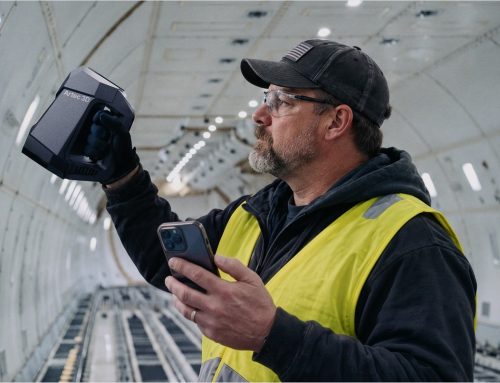
Modern 3D scanning allows students to capture highly accurate digital representations of physical objects in minutes. Instead of spending hours measuring complex geometry by hand, they can begin analysing and understanding the engineering problem almost immediately.
Perhaps more importantly, they begin to appreciate that engineering is often about solving existing problems rather than creating entirely new products.
Reverse Engineering Becomes an Engineering Exercise
Capturing a part is only the beginning.
Once scan data has been converted into an editable CAD model, students can begin asking the questions that every engineer faces.
- Could this component be lighter?
- Could several parts be combined into one?
- Would a different manufacturing process improve performance?
- Could the design be made easier to assemble or maintain?
This is where engineering judgement begins to develop.
Reverse engineering is not about copying an existing part. It is about understanding why it was designed that way and whether today’s manufacturing technologies make something better possible.
Designing for Manufacture Means Designing Differently
One of the most valuable lessons students can learn is that every manufacturing process has its own design rules.
A component intended for CNC machining often looks very different from one designed for additive manufacturing.
Engineers no longer need to design around the limitations of cutting tools alone. Internal channels, lightweight lattice structures, part consolidation and complex geometries become practical engineering solutions rather than theoretical concepts.
Design for Additive Manufacturing (DfAM) encourages students to think differently about how parts perform, how they are assembled and how they might be improved.
These are increasingly the skills employers are looking for.
Manufacturing Becomes Part of the Design Process
Perhaps the biggest cultural shift is that manufacturing is no longer the end of the project.
Industrial 3D printing allows students to manufacture functional engineering components quickly enough that design and manufacturing become part of the same iterative process.
- A Formula Student suspension bracket can be redesigned after testing.
- A robotic gripper can be modified to improve performance.
- A laboratory fixture can be refined following experimental results.
Instead of waiting weeks for outsourced manufacture, students can evaluate ideas while they are still fresh, learning from each iteration.
That process of testing, refining and improving mirrors the way many engineering companies now develop products.
Validation Completes the Digital Thread
Good engineering doesn’t end when the part comes off the printer.
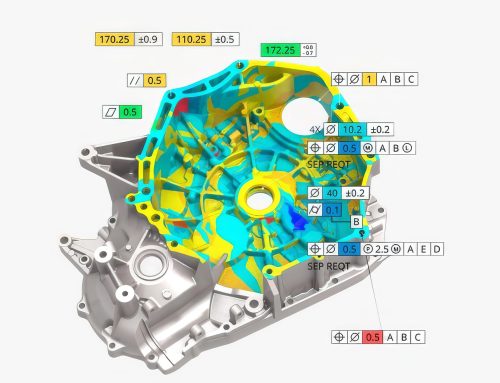
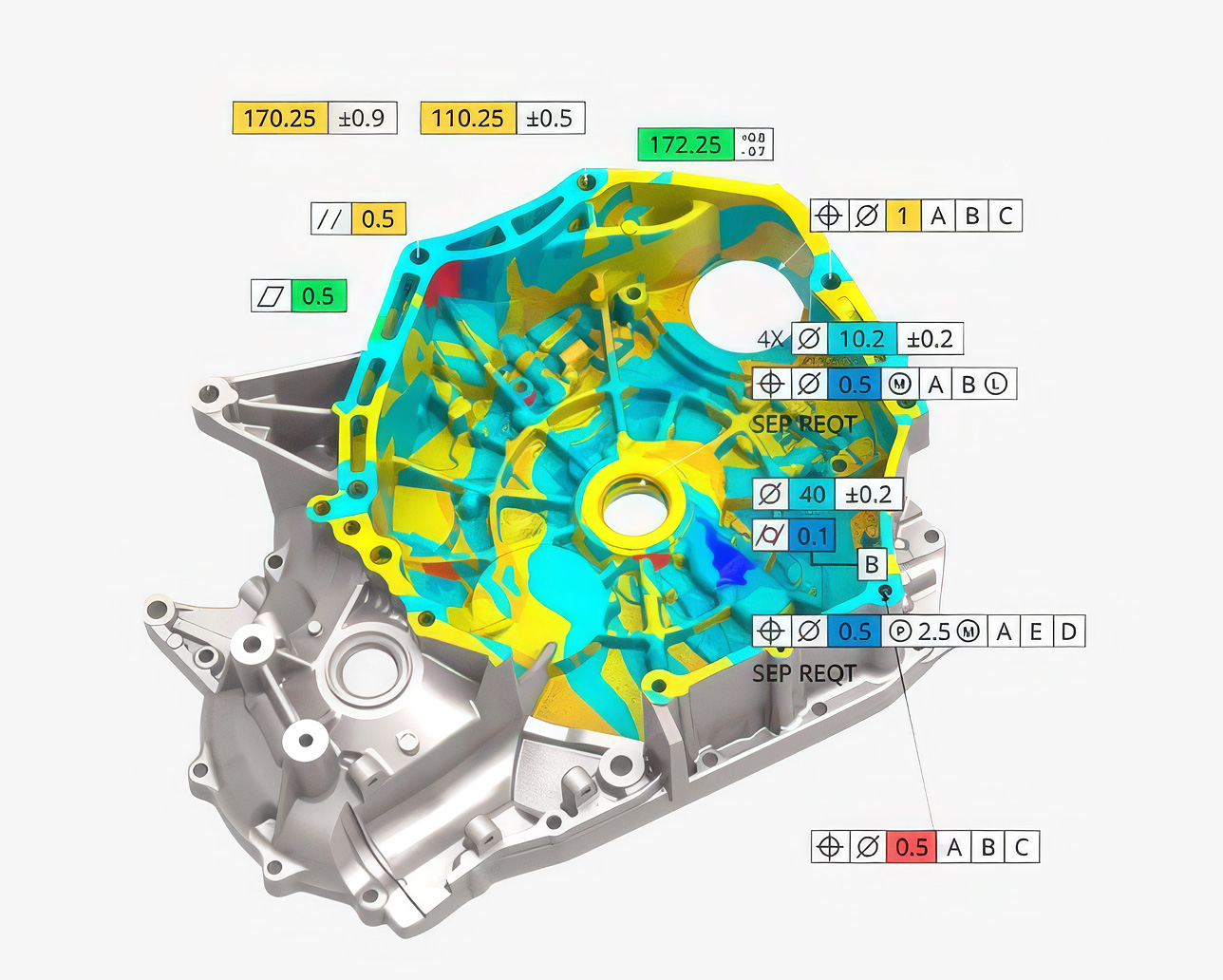
In many industries, manufactured components are scanned once again and compared with the original CAD model to confirm they meet specification.
Introducing students to digital inspection completes the engineering workflow. They begin to understand that quality is not simply checking dimensions at the end of a project. It is an integral part of design, manufacture and continuous improvement.
By experiencing the complete digital thread – from physical component to digital model, manufactured part and verified result – students gain a much deeper understanding of modern engineering practice.
Preparing Students for the Workplace
Engineering education has always evolved alongside industry.
Today’s graduates are entering workplaces where digital manufacturing, reverse engineering and additive manufacturing are becoming increasingly common. Employers are looking for engineers who can work confidently across disciplines, understand digital workflows and adapt quickly to new technologies.
Teaching students how these technologies work together does more than improve technical knowledge.
It develops problem-solving skills, encourages innovation and helps bridge the gap between academic study and professional engineering practice.
The tools themselves will continue to evolve.
The ability to think like an engineer – and to understand the complete journey from physical part to validated component – is what will remain valuable throughout a graduate’s career.
The Complete Digital Engineering Workflow
At Mark3D, we help universities introduce students to the same digital engineering workflows used throughout modern industry.
By combining professional 3D scanning, reverse engineering, industrial composite 3D printing and digital inspection, engineering departments can provide students with practical experience that extends far beyond individual technologies.
It is not simply about learning how to use a scanner or a 3D printer.
It is about understanding how modern engineering works.
Discover How Universities Are Preparing Students for Modern Manufacturing




Leave A Comment