
3D Printing for Manufacturing
3D printing for manufacturing is helping to produce tooling, jigs, fixtures and other production parts more efficiently, while giving engineering teams greater flexibility when requirements change.
Used alongside established manufacturing processes, industrial 3D printing can help reduce reliance on outsourced production, free up machining capacity and bring suitable applications in-house.
Mark3D works with manufacturers to identify where additive manufacturing can deliver practical value across production environments.

3D printing in the manufacturing industry
3D printing can support a wide range of manufacturing applications, from production tooling and workholding to inspection aids and replacement parts.
3D printing and manufacturing industry processes are naturally complementary, with additive manufacturing supporting established production methods rather than replacing them. Parts that are well suited to 3D printing can be produced separately, allowing conventional machinery to remain focused on applications that require it.
For manufacturers, this creates greater flexibility when responding to design changes, production requirements and short lead times.

Tooling, jigs and fixtures
Tooling is one of the most established uses of 3D printing for manufacturing.
Jigs, fixtures and production aids can often be produced directly from CAD data, reducing the need to outsource relatively simple tooling or use machining capacity to manufacture it.
Applications include:
- Assembly fixtures
- Drill guides
- Inspection gauges
- Workholding solutions
- Composite moulds
- Production tooling
Composite 3D printing is particularly useful for applications where strength, dimensional stability and low weight are important.
Bringing suitable tooling production in-house can also make it easier to replace damaged parts, respond to engineering changes and adapt tooling as production requirements evolve.
Mark3D has explored this application in more detail in its guide to reducing lead times and improving manufacturing resilience with composite tooling.
Greater flexibility across manufacturing
3D printing gives engineering teams another way to respond to production requirements without relying on a single manufacturing process.
Suitable parts can be produced when needed, and digital designs can be revised before the next part is printed. This is particularly useful for low-volume production aids, changing component designs and applications where conventional tooling would introduce unnecessary lead time.
Bringing more of this capability in-house can also reduce dependence on external suppliers and give manufacturers greater control over production schedules.

Industrial 3D printing for manufacturing
The right 3D printing technology depends on the application.
Material properties, accuracy, loading, working environment and production requirements all need to be considered before deciding whether additive manufacturing is suitable.
Mark3D specialises in industrial Markforged 3D printing systems for composite and metal applications. Our team can help manufacturers assess potential applications and identify where 3D printing can complement existing production processes.
Speak to Mark3D about 3D printing for manufacturing
If you are looking at how 3D printing could support your manufacturing operation, Mark3D can help assess your applications, materials and production requirements.
Whether you want to bring tooling in-house, produce jigs and fixtures or explore wider additive manufacturing applications, our team can help identify where the technology fits.
Contact Mark3D to discuss your manufacturing requirements.
Mark3D UK Limited
Romsley Point
Farley Lane, Romsley, Halesowen, B62 0LG
Phone: +44 121 661 1151
Freephone: 0800 193 3650
Email: printstronger@mark3d.co.uk
World market leaders rely on Markforged 3D printers

Learn more about applications with metal 3D printing!
For which applications is the Metal X suitable? How do I design correctly for metal 3D printing? What do users say and where can I find more information? – This is the right place for you! We listed some information leading you directly to the matching answers.
Design Guide
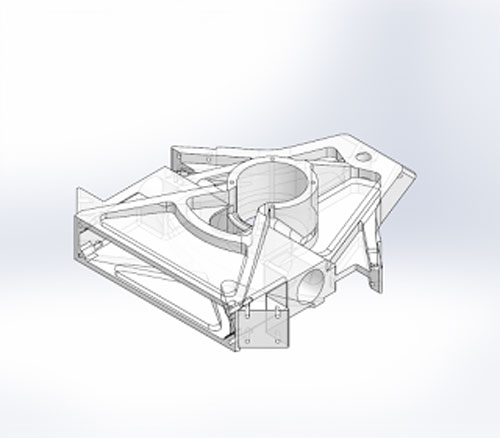
DfAM – How do you design your part best for metal 3D printing? In this guide you will find valuable tips on design, material selection and post-processing.
Problemes to solve
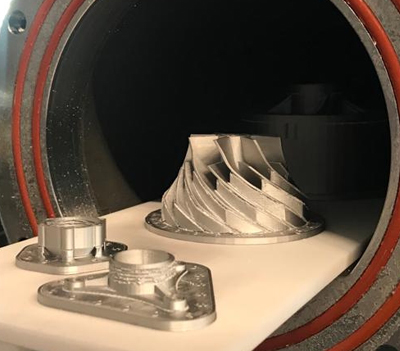
In this white paper, we take a look at three benefits of metal additive manufacturing and three problems the technology is perfectly suited to solve.
Case Study
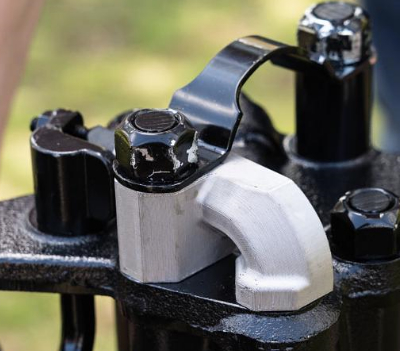
In this practical case study from Stanley Black & Decker, cost and lead time were saved by optimizing an assembly.
Webinar
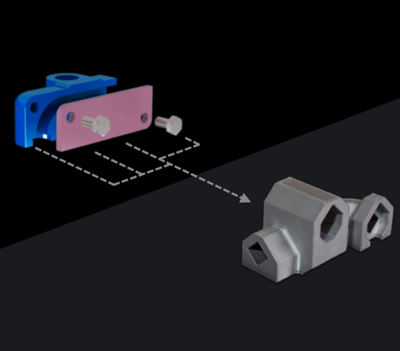
An application engineer from Markforged explains the Metal X system and which materials are available. He also shows a complete run from printing to the finished part.